Skip to content
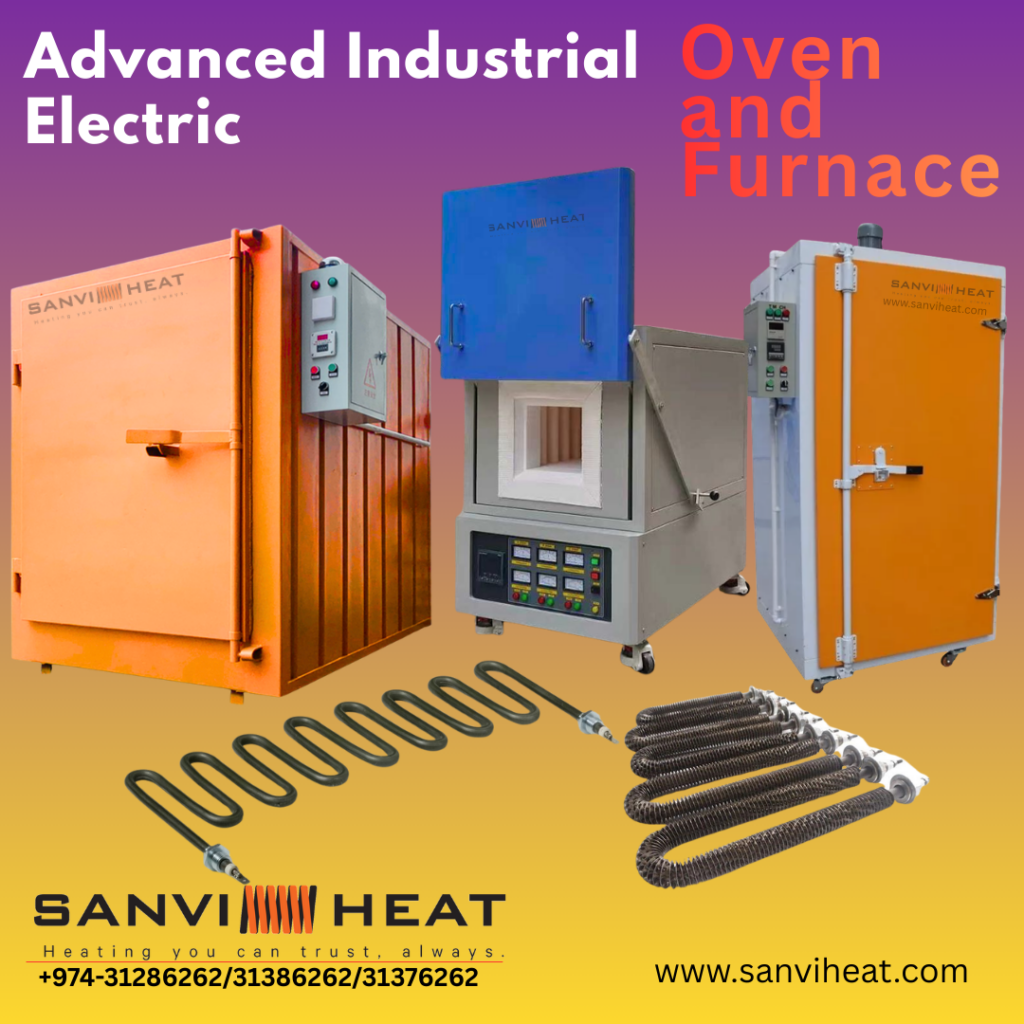
Two very different heat-processing equipments used in labs and industry.
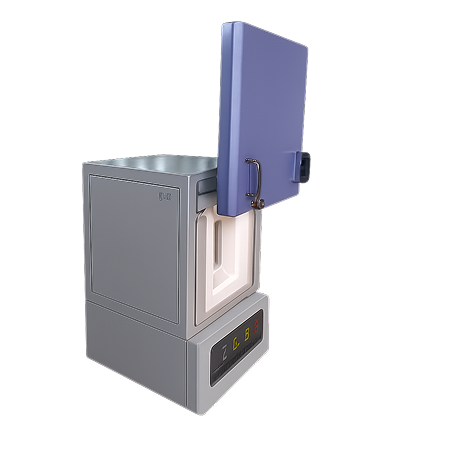
Muffle furnace is a laboratory or industrial furnace designed to heat materials to very high temperatures while isolating the sample from direct contact with flames, fuel, or combustion gases.
The word “muffle” refers to the insulated chamber that surrounds the sample and protects it from contamination
What They’re Used For Muffle Furnace
- Ash content & loss-on-ignition (LOI) testing
- Ceramic sintering
- Heat-treating metals
- High-temperature decomposition
- Material research requiring clean, contaminant-free heat
How a Muffle Furnace Works
It uses electric heating elements (usually embedded in ceramic insulation).
The sample is placed inside a sealed, insulated chamber.
Heat radiates evenly around the chamber.
Temperatures typically range from 300°C to 1800°C, depending on the model.
Unlike gas furnaces, there is no direct flame contact, which ensures clean and controlled heating.
Types of Muffle-Furnaces
Box Muffle-Furnace – Most common lab type
Tube Furnace – For controlled atmosphere experiments
High-Temperature Furnace – Up to 1700–1800°C
Industrial Muffle-Furnace – Large capacity for production use
🔥 Purpose & Function
| Feature | Muffle Furnace | Curing Oven |
| Primary Use | High-temperature heating & thermal analysis | Low- to medium-temperature curing and drying |
| Typical Temperature Range | ~300 °C to 1800 °C (very high) | ~50 °C to 250 °C (moderate) |
| Heating Method | Enclosed, insulated chamber with radiant heat | Heated chamber with convection/forced air |
| Atmosphere | Often inert or isolated from combustion (no flame contact) | Ambient air or controlled humidity (not sealed like a muffle) |
| Process Control | Precise temperature profiling & dwell times | Time-temperature cure cycles |
Curing Oven
- Curing coatings (paints, powders, adhesives)
- Drying components or coatings
- Bake-outs (eliminating solvents/moisture)
- Composite part curing
- Aging tests at moderate temps
Heating & Airflow Muffle Furnace
- Heat radiates from elements embedded in refractory insulation.
- Sample is thermally isolated — no direct flame or air contact.
- Less airflow; mainly radiation/conduction.
Curing Oven
- Uses convection heating with airflow (natural or forced).
- Air carries heat around parts for uniform curing.
- Suitable for large loads and through-air processes.
Key Differences
🔹 Temperature Capability
Muffle Furnace: much higher temperatures — ideal for decomposition, calcination, sintering.
Curing Oven: limited by materials & safety — suitable for curing polymers/coatings.
🔹 Atmosphere & Contamination
Muffle Furnace: sealed environment; minimal contamination; sometimes inert gas purged.
Curing Oven: open airflow; coatings are cured in ambient.
🔹 Load & Throughput
Muffle Furnace: smaller chambers; slower processes.
Curing Oven: larger chambers; can process many parts at once.
🔹 Control & Cycling
Muffle Furnace: precise temperature ramps and dwells crucial for thermal analysis.
Curing Oven: controlled temperature profiles optimized for specific cures.
When to Choose Which
Choose a Muffle Furnace if you need:
Very high temperatures (>500 °C)
Thermally isolating samples from air
Analytical accuracy (e.g., ash testing, LOI)
Choose a Curing Oven if you need:
To cure coatings, adhesives, composites
Gentle, uniform heat with airflow
Higher throughput and larger parts
Example Use Cases
Muffle Furnace: Determining ash content in polymers according to ASTM standards.
Curing Oven: Curing a powder-coated automotive part at 180 °c