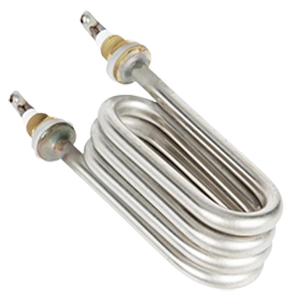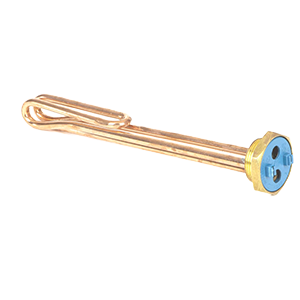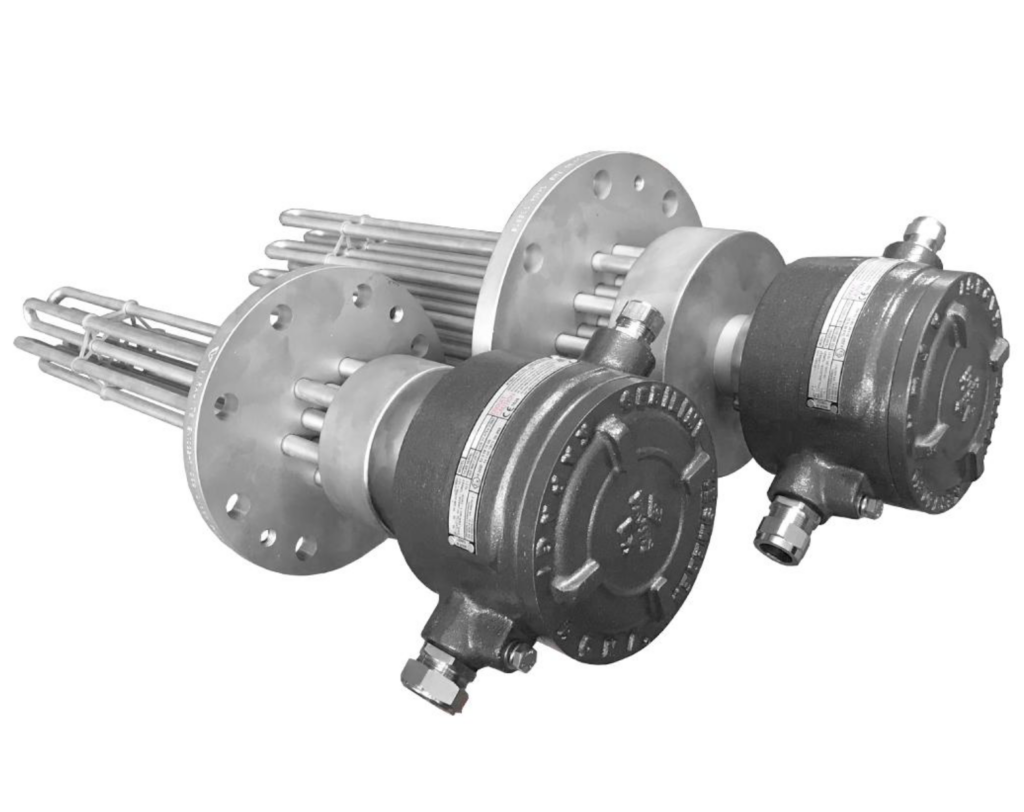
When you are responsible for keeping a large industrial plant running, you look at heating equipment through two lenses: how much it costs to run, and how safely it operates. In heavy industries like chemical processing, oil refining, and water treatment, Flange Heater immersion heaters are the workhorses. Because they sit directly inside the fluid they are heating, they deliver an incredibly high thermal efficiency, often between 95% and 99%. Almost every kilowatt of electricity you put into the system goes exactly where it belongs: into the fluid.
But that high efficiency is only sustainable if the heater is specified and maintained correctly. If you get the design wrong, a highly efficient heater can quickly become an expensive maintenance headache—or a safety hazard.
As a manufacturer, we look at the engineering decisions that balance peak performance with long-term reliability.
_______________________________________________________________________________________
1. The Chemistry Match: Sheath Materials
Putting the wrong metal into a chemical bath is one of the fastest ways to destroy a heating element. If the fluid corrodes the outer sheath, it causes a ground fault, which can trip your system or, in worse cases, cause a short circuit and an explosion.
- Copper: Best left for clean water, freeze protection, and rinse tanks.
- Steel or Carbon Steel: Excellent for low-viscosity oils, lubricants, tar, and fluid heat transfer media.
- Stainless Steel (304/316L): 304 works beautifully for food processing and deionized water. 316L adds molybdenum to the mix, which prevents pitting when you are dealing with chlorides or mild acids.
- Incoloy (800/840): The choice for high-temperature air heating and aggressive, corrosive chemical solutions because of its high nickel and chromium content.
2. Balancing the Power: Watt Density
Watt density is simply the amount of power the heater pushes out per square inch of the element’s surface. It is tempting to try to heat a tank as fast as possible by choosing a high watt density, but that can backfire depending on the fluid.
If you push 60 Watts per square inch into a heavy, viscous oil, the oil cannot move fast enough to carry the heat away. The fluid will char, creating a carbon crust on the heating element. This crust acts like insulation, trapping the heat inside the element until the internal resistance wire overheats and burns out.
For clean water, you can easily run 50 to 75 Watts per square inch. For heavy oils or viscous chemicals, you need to back that down to 10 or 15 Watts per square inch to protect both the fluid and the heater.
3. Safety Controls and Dry Firing
An industrial heater is designed to dissipate its heat into a liquid. If the liquid level drops and the elements are exposed to bare air—a situation known as dry firing—the temperature of the rods can soar past 1000°F in less than two minutes.
To prevent this, two safety components are essential:
- Liquid Level Switches: The heater must be interlocked with a reliable level switch so that power is cut instantly if the fluid drops below the heating bundle.
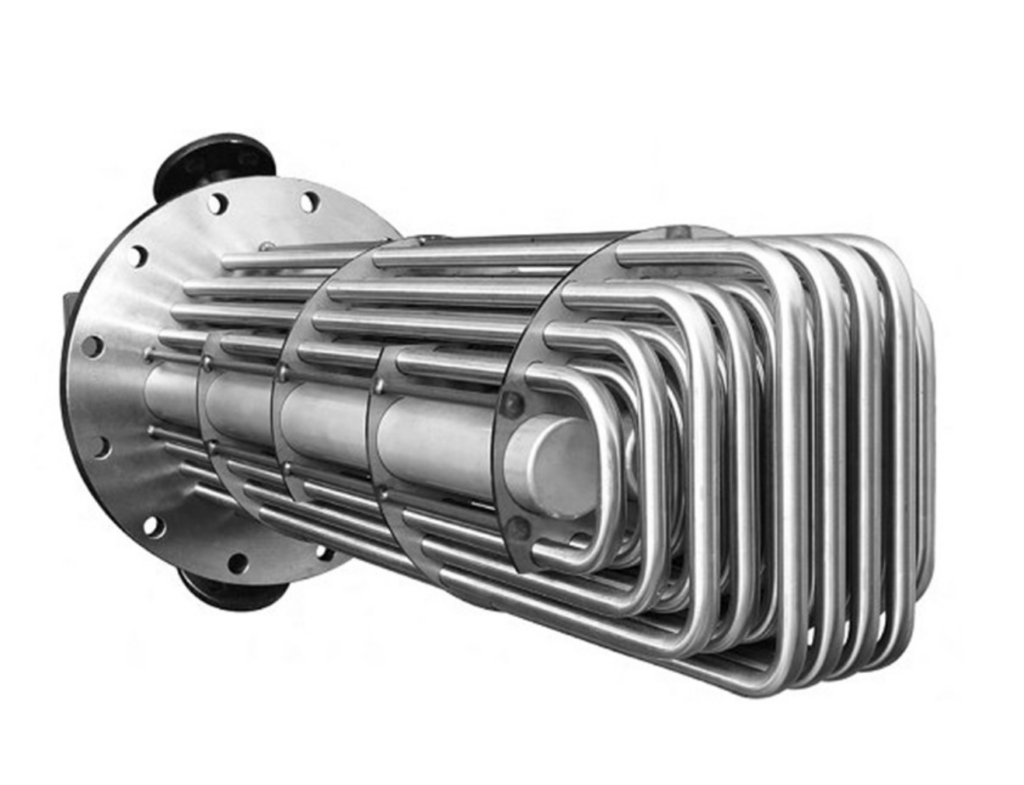
- Over-temperature Thermocouples: Tucking a thermocouple inside the element bundle allows you to monitor the actual skin temperature of the sheath. If it passes a set safety limit, a backup controller cuts the main power before the metal distorts or melts.
4. Preventing Moisture Problems (The Megohm Rule)
When a heater sits idle, the magnesium oxide insulation inside the elements can absorb moisture from the surrounding air. This lowers the insulation resistance, creating a “low megohm” condition.
If you turn on a damp heater with full power, the internal moisture turns to steam, expands, and can rupture the element or cause an immediate ground fault trip. Before powering up a system that has been offline, always check it with a megohmmeter. If the reading is low, the heater needs to be dried out in an oven or run at half-voltage to bake out the moisture slowly before putting it under a full load.
Designing for Your Process
A good flanged heater is not just a catalogue item; it is a precisely calculated piece of industrial equipment. By matching the flange rating to your vessel’s pressure, selecting a compatible sheath material, and calculating the exact right watt density for your fluid’s viscosity, you get a system that runs cleanly for years with minimal intervention.
How do you calculate the exact kilowatt capacity needed for an industrial tank based on volume, temperature rise, and heat loss?
To calculate the exact kilowatt (kW) capacity required for an industrial tank, you must account for two distinct factors: the theoretical power needed to heat the fluid up to temperature, and the heat losses that escape from the tank during operation.Here is the step-by-step engineering calculation to find the exact total kW capacity needed
Step 1: Calculate the Fluid Mass
Before calculating thermal energy, you need to know the exact mass of the fluid in pounds (lbs) or kilograms (kg).
- Formula: Mass=Volume×Density
Example: If you have a 500-gallon tank of water, and water weighs roughly 8.34 lbs per gallon, your mass is 4,170 lbs.
Step 2: Calculate the Heat-Up Power (kWA)
This is the amount of energy required to change the temperature of the fluid within a specified time limit, assuming zero heat loss.

Specific Heat (Cp): The amount of heat required to raise the temperature of one pound of a substance by 1°F. (Water = 1.0; Typical industrial oils = 0.40 to 0.50).
ΔT (Temperature Rise): The final target temperature minus the starting ambient temperature.
3,412: The conversion factor (1 kW = 3,412 BTU/hr).
Step 3: Calculate the Operating Heat Losses (kWB)
Heat escapes continuously through the tank walls, the liquid surface, and the pipe connections. To prevent the temperature from stalling before it reaches the setpoint, you must calculate these losses.

Surface Area: Calculate the total square footage of the tank walls, bottom, and top surface.
Heat Loss Factor: This is derived from industry standard charts. It depends on the operating temperature, whether the tank is insulated or uninsulated, and if it is indoors or outdoors. For example, an uninsulated steel tank top at 150°F loses significantly more BTUs per square foot than an insulated sidewall.
Step 4: Combine and Add a Safety Factor
Because ambient temperatures fluctuate, insulation degrades, and voltage can drop, you should never design a heating system to operate at 100% capacity under perfect conditions. A standard engineering safety factor of 15% to 20% is added to the total.

Real-World Example Calculation
Let’s calculate the requirements for a clean water tank under the following conditions:
Tank Volume: 500 Gallons (Water mass = 4,170 lbs)
Fluid Specific Heat: 1.0
Temperature Rise (ΔT): From 60°F to 160°F (ΔT=1000F)
Desired Heat-Up Time: 4 Hours
Estimated Total Tank Heat Loss: 15,000 BTU/hr (Based on tank surface area and insulation)
1. Calculate Heat-Up Power (kWA):

2. Calculate Heat Loss Power (kWBB):
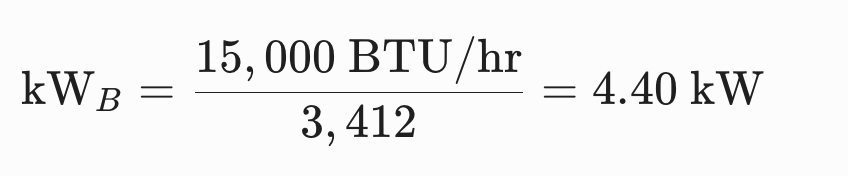
3. Total with 20% Safety Factor:

Specification Recommendation: For this application, you would round up and specify a standard 45 kW flanged immersion heater to ensure the system easily achieves the 4-hour heat-up target even on cold winter days.