Skip to content
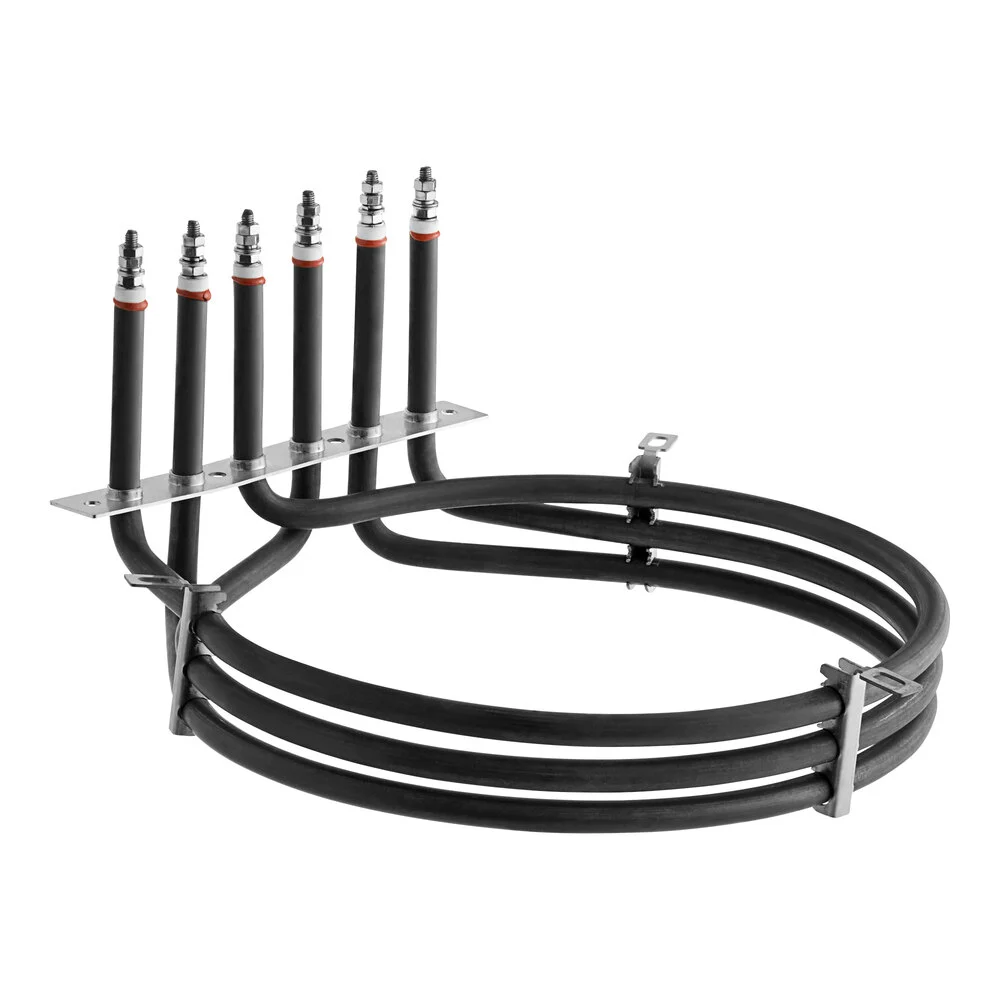
✔ More Even, Steady Heat
Electric heating elements advantages provide consistent heat throughout the oven great for baking cakes, cookies, and pastries that need stable temperatures.
Electric Oven Heating Elements
Electric ovens use electrical heating elements (usually at the top and bottom) to warm the oven cavity and keep warm inside the oven.
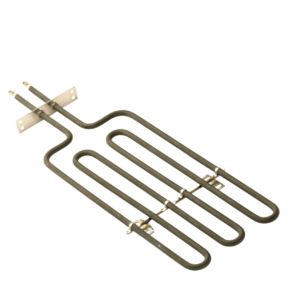
Precise Temperature Control in Electric Ovens
Sanvi Heat Electric heating ovens provide precise temperature control because their oven heating elements are regulated by either a temperature control switch (thermostat) or a digital control system. Once the desired temperature is set, the control system automatically switches the heating elements on and off to maintain that temperature.
Unlike gas ovens, which rely on an open flame that can cause temperature fluctuations, electric ovens deliver steady and uniform heat. Digital controls further enhance accuracy by using sensors and microprocessors to monitor the oven temperature continuously, making fine adjustments as needed.
As a result, electric ovens experience fewer temperature fluctuations, ensuring consistent cooking conditions. This precision is especially important for baking and roasting, where even small temperature changes can affect food quality.
Ideal for Baking with Electrical Oven
Dry, consistent electrical heat energy provide helps produce good browning and crusts on baked goods.
Oven heating elements offer several advantages, especially compared to other cooking or heating methods:
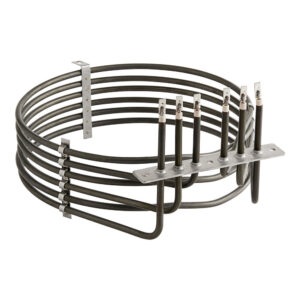
🔥 Advantages of Oven Heating Elements
Even Heat Distribution
Heating elements (top, bottom, or both) provide consistent heat throughout the oven, helping food cook evenly.
Versatility
Different elements support multiple cooking modes—baking, roasting, broiling, grilling, and convection cooking.
Efficient Cooking
Electric heating elements convert electrical energy directly into heat with high efficiency and minimal energy loss.
Clean and Safe Operation
Unlike gas burners, electric heating elements don’t produce combustion gases, smoke, or open flames, making them safer and cleaner.
Uniform Browning and Crisping
Top heating elements (broilers) are excellent for browning, melting cheese, and crisping food surfaces.
Low Maintenance
Heating elements are durable, easy to replace, and generally require little maintenance.
Compatibility with Convection
When paired with a fan, heating elements work efficiently in convection ovens, reducing cooking time and improving texture.
Cost-Effective
Electric ovens with heating elements are often less expensive to install and maintain than gas ovens
Disadvantages Electrical Energy Oven
Longer Preheat Time
Electric ovens usually take more time to reach the target temperature than gas ovens
Dry Cooking Environment
Lacks moisture from combustion, which can dry out some foods (though beneficial for crisping)
Depends on Electricity
Won’t work during power outages.
| Feature | Electric Oven | Gas Oven |
| Heat Source | Heating Element | Open Flame |
| Temperature Control | Stable and Precise | Instant and responsive |
| Humidity | Dry and Crisp | Slightly moist |
| Best For | Baking, Desserts | Roasting and Grilling |
more details you can check with SanviHeat