Skip to content
🌿 Importance of Heating Elements
Sanvi Heat Electrical sauna heater elements are the heart of modern sauna systems, providing efficient, safe, and consistent heat. Their usage depends on sauna size, voltage requirements, and stone capacity, while quality is determined by durability, material choice (often stainless steel), and compatibility with high temperatures. Choosing the right element ensures long-lasting performance and optimal sauna experience. Choosing the right sauna heater is essential for creating the perfect experience, whether you prefer the crackle of wood or the convenience of smart technology.
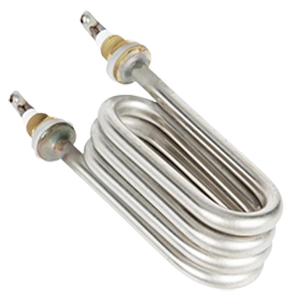
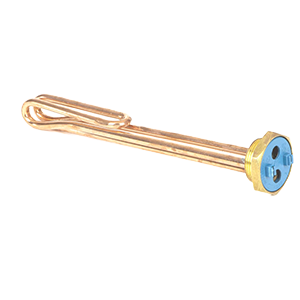
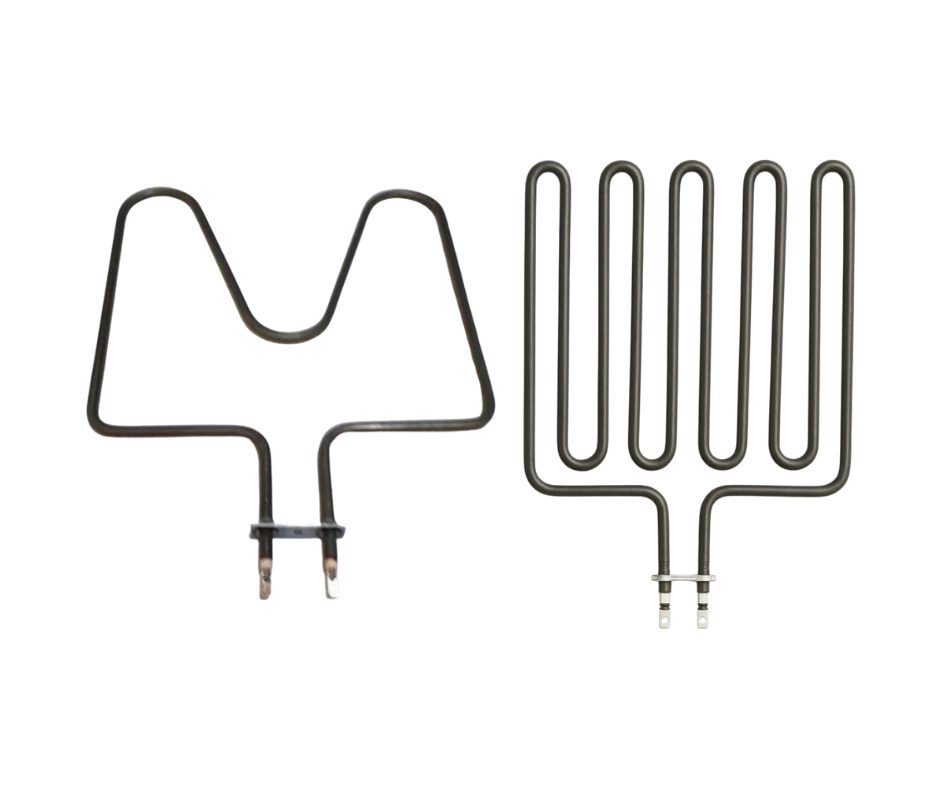
Sauna heater elements are the electrical components responsible for generating heat in electric sauna stoves. They convert electrical energy into thermal energy, warming sauna stones and creating the traditional steam when water is poured over them.
- Uneven heating
- Frequent tripping of breakers
- Shortened lifespan of the heater
- Safety risks such as overheating or cracks in the element
🔌 Introduction to Sauna Heater Elements
Quality Considerations
When evaluating sauna heater elements, several factors determine performance and durability:
- Material: High-grade stainless steel and nickel-chromium alloys resist corrosion and withstand repeated heating cycles.
- Wattage & Voltage: Elements are available in sizes from 2 kW to 35 kW, compatible with single-phase (240V) and three-phase (208V) systems.
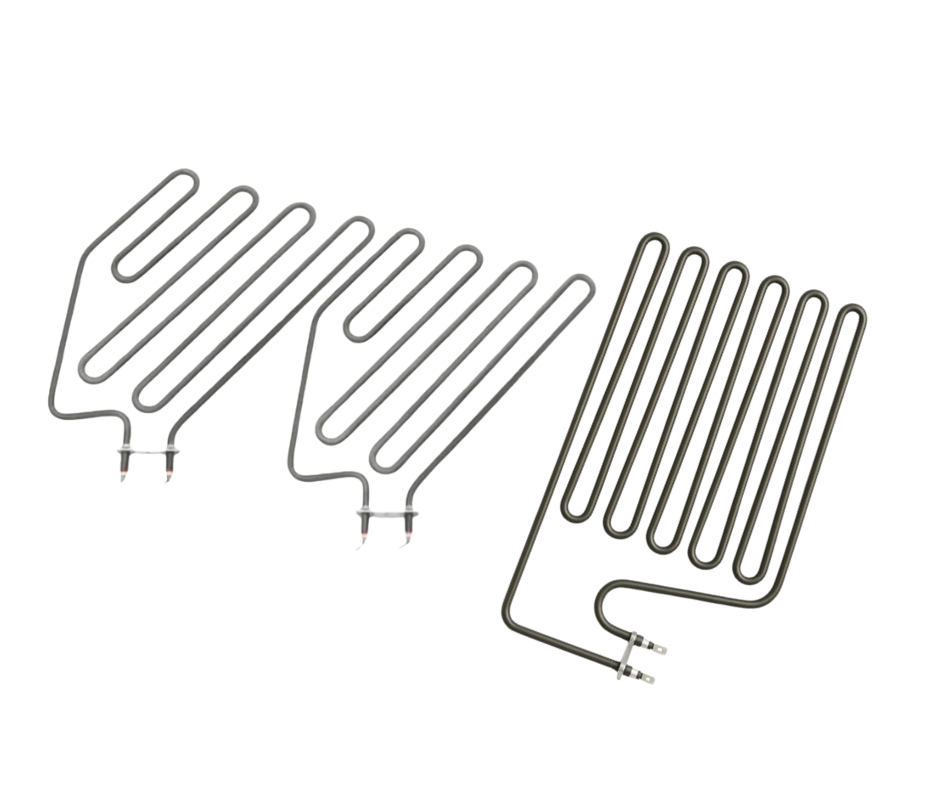
- Compatibility available from Sanvi Heat : Each heater brand (Harvia, HUUM, SAWO, Helo, Narvi, etc.) requires specific element designs. Using the wrong type can damage the heater.
- Heat Distribution: Premium elements ensure even heating across the stone bed, preventing hot spots.
- Safety Features: Certified elements include insulation and protective coatings to reduce risk of electrical faults.
⚙️ Usage of Sauna Heater Elements
- Power Sizing
- Rule of thumb: 1 kW per 45–50 cubic feet of sauna space.
- Undersized heaters lead to weak heat, while oversized ones create harsh, uncomfortable conditions.
Voltage Requirements
- Most traditional electric heaters require 240V, similar to household stoves or dryers.
- Larger commercial saunas may use 208V/3-phase systems
Stone Capacity
More stones = more thermal mass = softer, longer-lasting steam.
Wall-mounted heaters suit small home saunas, while floor-standing models are better for larger spaces.
🛠️ Quality Factors in Sauna Heater Elements
Material
- High-quality elements are made of stainless steel, which resists corrosion and withstands high temperatures.
- Some models use nickel-chromium alloys for enhanced durability.
Durability
- Designed to endure frequent heating and cooling cycles without cracking.
- Lifespan varies but premium elements can last 1-2 years with proper care.
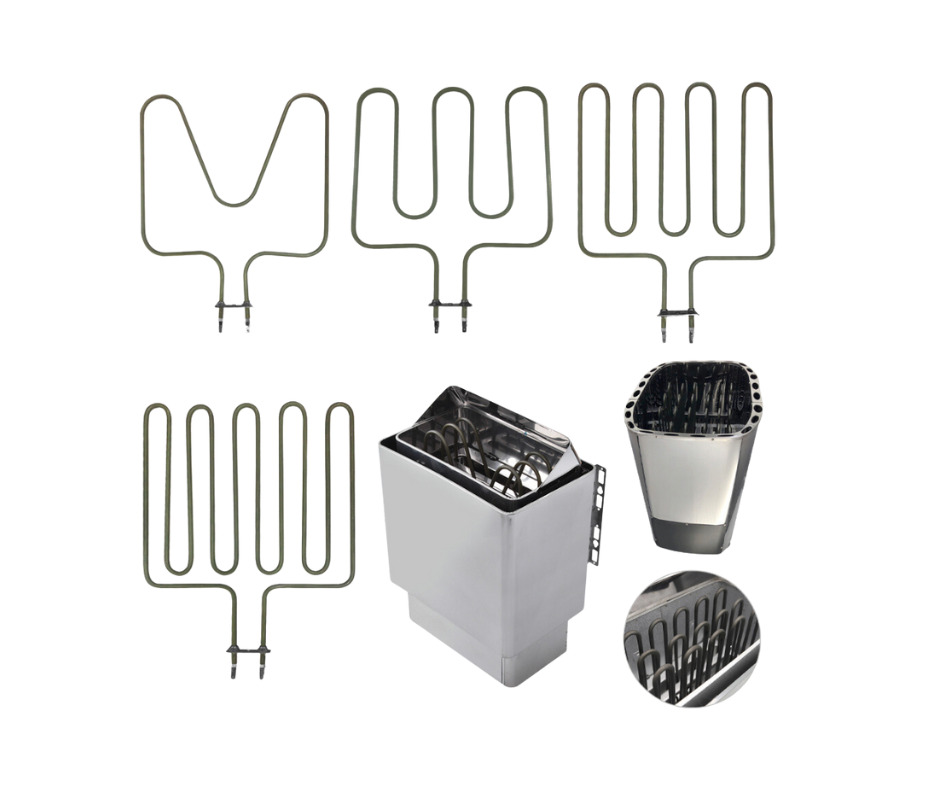
Performance
- Efficient heat transfer ensures fast warm-up times and consistent sauna temperatures.
- Quality elements minimize energy waste and reduce operating costs.
📊 Comparison of Popular Sauna Heater Elements KW
We have standard 6kw, 2kw, 8kw also we can customise
⚠️ Risks & Maintenance Tips
Risks of Poor Quality Elements
- Short lifespan, uneven heating, risk of electrical faults.
- Can damage sauna stones or reduce steam quality.
Maintenance
- Regularly check for corrosion or cracks.
- Avoid pouring excessive water directly on elements.
- Replace elements promptly when performance drops
🔍 Signs You Need Replacement
- Slower heating times
- Uneven steam production
- Visible cracks or discoloration on the element
- Frequent electrical trips
Replacing elements promptly prevents damage to the heater and ensures consistent sauna performance.