Skip to content
The Sanvi Heat Engineering Guide
In heavy industry—whether managing a chemical processing plant in Rotterdam or an oil refining facility in Abu Dhabi—achieving the precise thermal output required for your machinery is vital. When sourcing heavy-duty heating elements, one question dominates technical inquiries: What is the maximum wattage of an industrial Tubular Heater Elements?
At Sanvi Heat, we understand that maximizing thermal capacity is never a “one-size-fits-all” scenario. The true limit of an industrial Tubular Heater heating element’s wattage is not determined by a single maximum number, but rather by balancing mechanical boundaries with strict application safety standards.
Here is an engineering breakdown of what dictates maximum wattage and how Sanvi Heat customizes solutions specifically to meet the distinct atmospheric and regulatory demands of our clients across Europe and the Middle East.
The Anatomy of Wattage: What Limits a Tubular Heater?
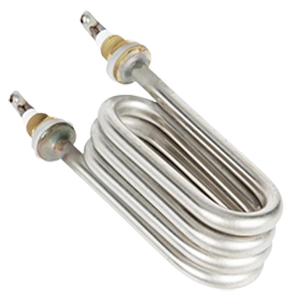
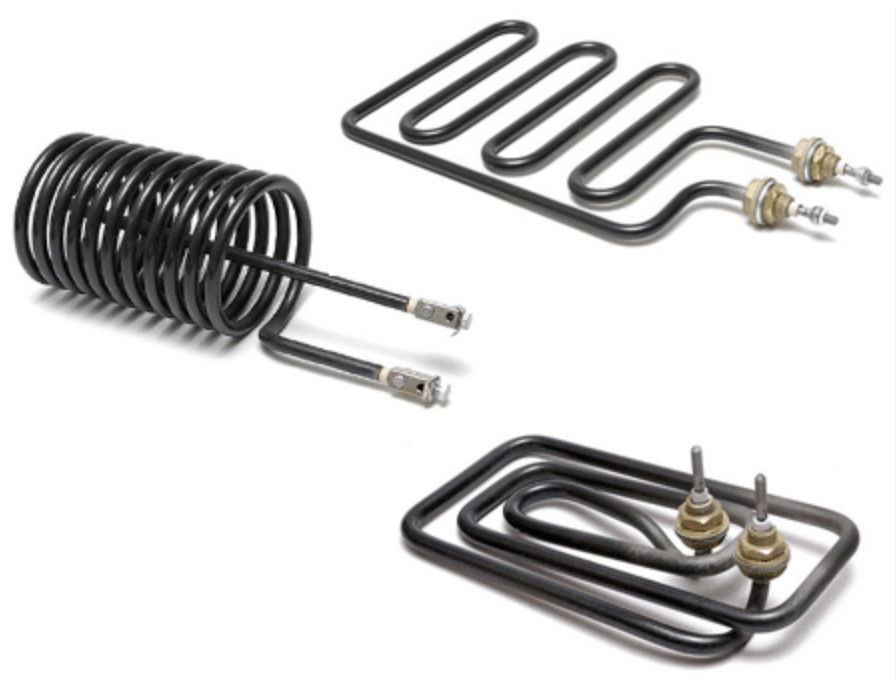
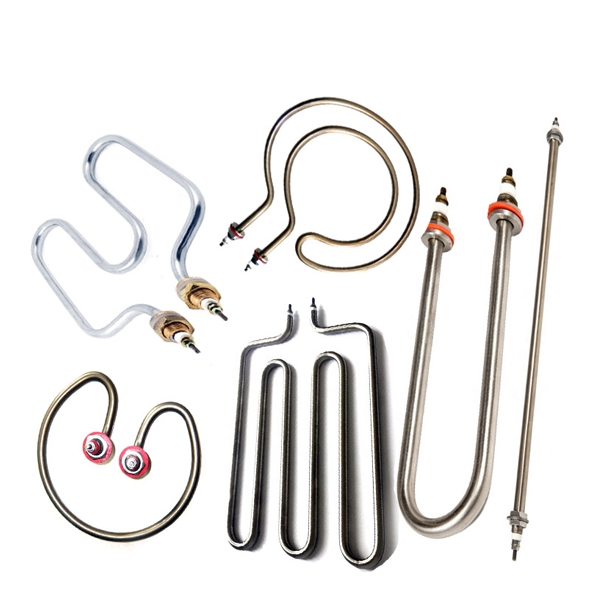
At its core, a tubular heater consists of a high-resistance heating coil (usually Nichrome) insulated by compacted Magnesium Oxide (MgO) powder and sheathed inside a robust metal tube. The maximum wattage this configuration can safely generate depends on four core engineering variables:
1. Sheath Material and Mechanical Dimensions
The physical boundaries of the heater dictate its limitations:
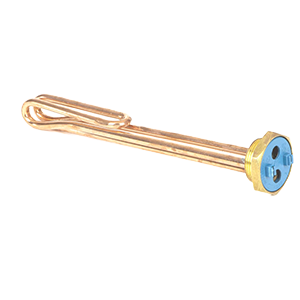
- Material Integrity: Standard copper tubes are restricted to lower thermal applications. For high-wattage systems, Sanvi Heat utilizes advanced stainless steels (like 304, 316L, or 321) and high-nickel alloys (such as Incoloy 800 or 840). These materials withstand intense internal operating temperatures without premature thermal degradation.
- Surface Area: The rule of thumb is straightforward—the larger the tube’s diameter and the longer its overall length, the greater the surface area available to dissipate heat. This allows for higher total wattages without spiking the watt density (the amount of power per square centimeter of the element).
2. The Surrounding Environment & Media
How effectively the surrounding medium carries heat away from the element directly controls its maximum safe wattage:
- For Liquid Applications (Water/Oil): Liquids conduct heat rapidly. Consequently, an industrial water immersion heater can safely sustain a much higher wattage (frequently ranging from 5,000W to 15,000W+ per element) because the liquid acts as an immediate heat sink.
- For Air and Gas Systems: Gases are poor conductors. If an element in an industrial air duct produces excessive heat too quickly, it will burn out. Therefore, air heating elements generally require lower maximum wattages or integrated fins to artifically expand surface area.
Regional Design Focus: Adapting to the Middle East & Europe
Operating conditions vary vastly by geography. At Sanvi Heat, we deliberately alter our technical configurations depending on where your project sits.
The Middle Eastern Challenge: High Ambient Extremes
In the Middle East, outdoor industrial environments often experience ambient temperatures exceeding 45°C to 50°C.
- The Problem: High ambient heat reduces the natural cooling threshold of the equipment.
- Sanvi Heat’s Solution: For our GCC clients, we deliberately design Tubular Heater elements with conservative watt densities but high-grade Incoloy sheaths. This guarantees that even when operating at maximum capacities under intense desert heat, the element avoids dangerous thermal spikes, protecting both the heater and volatile industrial media (such as crude oils or process water).
The European Mandate: Strict Efficiency & Directives
European industrial sectors operate under highly regulated legal frame-works targeting efficiency, carbon footprints, and occupational safety.
The Problem: Maximizing power output cannot come at the expense of energy waste or non-compliance.
Sanvi Heat’s Solution: Our high-wattage systems engineered for European markets prioritize optimal thermal transfer efficiency. We manufacture elements to precisely match your process criteria, avoiding the energy losses associated with over-specifying. Every unit is constructed to satisfy CE markings and, where necessary, ATEX / IECEx directives for explosive, hazardous environments commonly found in EU chemical processing.
Typical Wattage Thresholds at a Glance
While everything we build can be tailored to order, industrial tubular heater generally fall into these standard operating classes:
- Compact/Equipment Level (up to 2,000W): Found in small lab equipment, commercial food service, and specialized packaging machinery.
- Medium Industrial Applications (2,000W – 5,000W): Designed for mid-scale industrial ovens, environmental test chambers, and small-volume fluid heating loops.
- Heavy Duty Process Systems (5,000W to 15,000W+): Engineered for heavy chemical plants, large boilers, and large-scale industrial washing systems. By forming these elements into multi-heater flange assemblies, Sanvi Heat regularly delivers systems producing several hundred kilowatts (kW) of total power.
_______________________________________________________________________________________
Safety and Customization: The Sanvi Heat Guarantee
Pushing a tubular heater to its maximum wattage requires proactive engineering to mitigate the risk of catastrophic failure. Sanvi Heat mitigates these operational risks through:
Integrated Thermal Controls: Utilizing built-in thermocouples (Type J/K) and RTD sensors to immediately cut power if a critical threshold is breached.
Bespoke CAD Design: We calculate exact watt-density allowances based on your specific liquid viscosity, flow rate, and target temperature.
Whether you need a high-yield process heater for a maritime application in Germany, or an incredibly durable immersion system for a desalinization sub-station in Oman, or Qatar Sanvi Heat delivers.
Unsure which wattage or sheath material is required for your facility? [Contact +974-31376262 the Sanvi Heat Engineering Team today] to receive an exact thermodynamic calculation and quote for your next project.