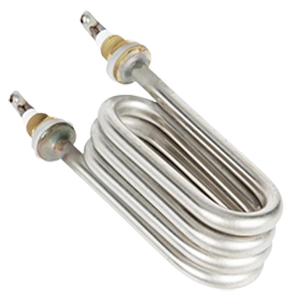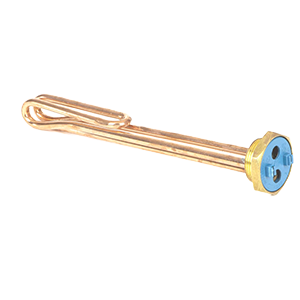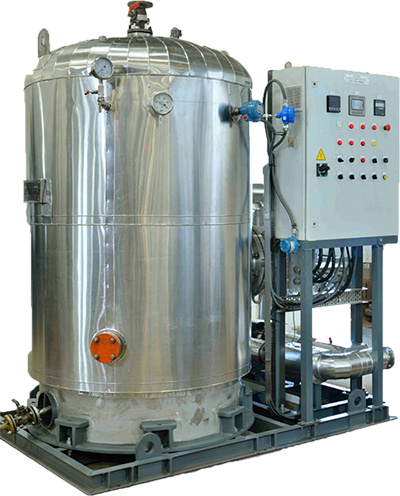
Limescale thrives where there is heat. When hard water meets a hot surface—like a Sanvi Heat immersion Heaters element—the heat causes the minerals to crystallize and bond to the metal.
When it comes to protecting Sanvi Heat immersion heaters, the Anode Rod is your most effective sacrificial defense. While often associated with home water heaters, industrial-grade anode rods are a game-changer for commercial clarifiers and high-volume boilers.
Here is how to use anode technology to prevent limescale and galvanic corrosion on your heating elements.
In Clarifiers: Limescale builds up on the internal weirs, pipes, and sludge-settling surfaces, reducing flow and contaminating the clarified water.
On Heaters: Scale acts as a thermal insulator. The heat cannot escape the element into the water, causing the internal coil to overheat and eventually “burn out.”
1. Preventing Limescale in Commercial Clarifiers
A clarifier’s job is to separate solids from liquids. If the unit itself is “scaling up,” the settling process is compromised.
2. Chemical Pre-Treatment (Scale Inhibitors)
The most effective way to protect a clarifier is to treat the water before it enters the tank. Antiscalants or scale inhibitors are injected into the feed water to keep minerals in a “suspended” state so they cannot bond to the clarifier walls.
3. pH Adjustment
Limescale is highly sensitive to pH levels. By maintaining a slightly more acidic or neutral pH, you can significantly reduce the rate of calcium precipitation.
4. Periodic Physical Scouring
For city-center commercial buildings with high-volume water needs, automated spray bars or mechanical scrapers should be inspected monthly. Preventing the “seed layer” of scale from forming is much easier than removing a thick crust later.
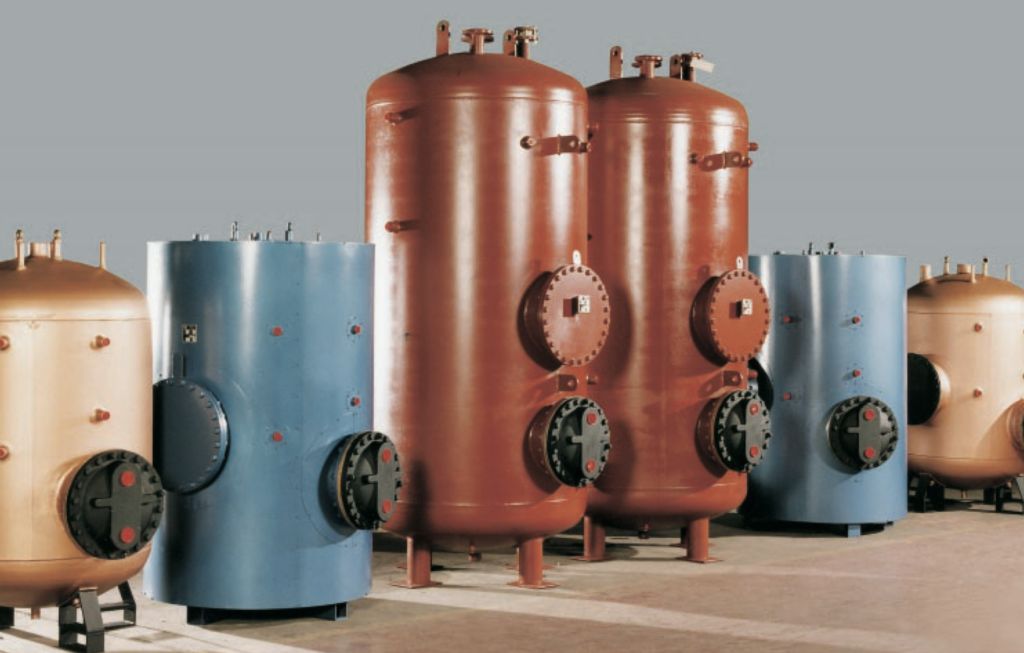
3. Protecting Your Immersion heater
The heating element is the most vulnerable part of any thermal system. At Sanvi Heat, we engineer our elements for durability, but they still require proper care.
Step 1: Use Softened Water
If your facility is in a “hard water” zone, the ROI on a water softener is massive. Softened water replaces calcium ions with sodium, which does not form scale. This can increase the lifespan of a Sanvi Heat element by up to 300%.
Step 2: Regular Descaling Baths
Don’t wait for the heater to fail. Implement a “Vinegar or Citric Acid Soak” as part of your preventive maintenance:
- Isolate the power and remove the element.
- Submerge the heating portion in a food-grade descaling solution.
- Let it sit until the scale bubbles away. Never use a hammer or screwdriver to scrape scale off, as this can nick the protective sheath and cause a short circuit.
Step 3: Choose High-Grade Materials (Incoloy)
At Sanvi Heat, we recommend Incoloy 800 or 825 for immersion heaters. These alloys are specifically designed to withstand higher temperatures and are more resistant to the “pitting” corrosion that occurs underneath scale deposits compared to standard stainless steel.
4. The Cost of Neglect
Ignoring limescale doesn’t just damage the equipment; it destroys your bottom line:
- Increased Energy Bills: Just 3mm of scale on a heating element can increase energy consumption by 25%.
- System Downtime: A scaled-up clarifier or a blown heater can shut down an entire hotel kitchen or industrial production line.
- Replacement Costs: Frequent replacement of “cheap” elements adds up. Investing in high-quality Sanvi Heat components and a maintenance plan is always cheaper in the long run.
1. What is an Anode Rod? (The “Sacrificial” Strategy)
An anode rod is a core of steel wire surrounded by a highly reactive metal—usually Magnesium, Aluminum, or Zinc.
In a water tank or clarifier, a natural chemical process called electrolysis occurs. This process normally attacks the softest metal available. Without an anode, that “soft metal” is often the copper or stainless steel sheath of your immersion heater.
- How it works: The anode rod has a lower “electrochemical potential” than the heating element. Essentially, the water “eats” the anode rod instead of your heater.
- The Limescale Connection: While anodes primarily prevent corrosion (pitting), they also influence how minerals precipitate. By altering the electrical charge of the water, they can help prevent scale from bonding as tightly to the heater’s surface.
2. Choosing the Right Anode for Your Environment
Not all water is the same. For a busy city building or an industrial clarifier, you must match the rod material to your water chemistry:
| Anode Material | Best Used For | Why? |
| Magnesium | Soft to Medium Water | High driving voltage; very effective but dissolves quickly in hard water. |
| Aluminum | Hard Water / High pH | More durable in “aggressive” water; better at handling high mineral content. |
| Zinc (Alum-Zinc) | Smelly Water (Sulfur) | Neutralizes the “rotten egg” smell caused by bacteria in some city water lines. |
| Powered (Impressed Current) | Industrial Clarifiers | Uses a small electrical current rather than a dissolving metal; maintenance-free for years. |
3. Positioning the Anode for Maximum Protection
To protect a Sanvi Heat immersion heater, the physical placement of the anode is critical:
- Proximity: The anode should be installed within the “line of sight” of the immersion heater. Electrolysis follows the path of least resistance.
- Grounding: Ensure the anode rod has a solid metal-to-metal connection with the tank or the heater’s mounting flange. If the connection is insulated by Teflon tape or scale, the protection circuit is broken.
4. Maintenance: The “50% Rule”
An anode rod is designed to be destroyed. If it isn’t dissolving, it isn’t working.
- Inspection: Check the rod every 6 to 12 months in commercial environments.
- Replacement: Once the rod has degraded to about 50% of its original diameter, or if the inner steel core is visible, replace it immediately.
- The Cost Benefit: A replacement anode rod costs a fraction of a new high-output immersion heater.
5. Pairing Anodes with Sanvi Heat Elements
At Sanvi Heat, we recommend a two-tier defense system for commercial buildings and clarifiers:
- Primary Defense: Install a high-quality Aluminum or Magnesium sacrificial anode.
- Secondary Defense: Use our Incoloy-sheathed elements, which provide a higher natural resistance to the minerals that manage to bypass the anode.
Sanvi Heat: Your Partner in Thermal Efficiency
Whether you are managing a busy city-center hotel or an industrial water treatment plant, don’t let limescale compromise your operations. Sanvi Heat provides custom-engineered immersion heaters designed to tackle the toughest water conditions.
Need a replacement element that can stand the heat?