Skip to content
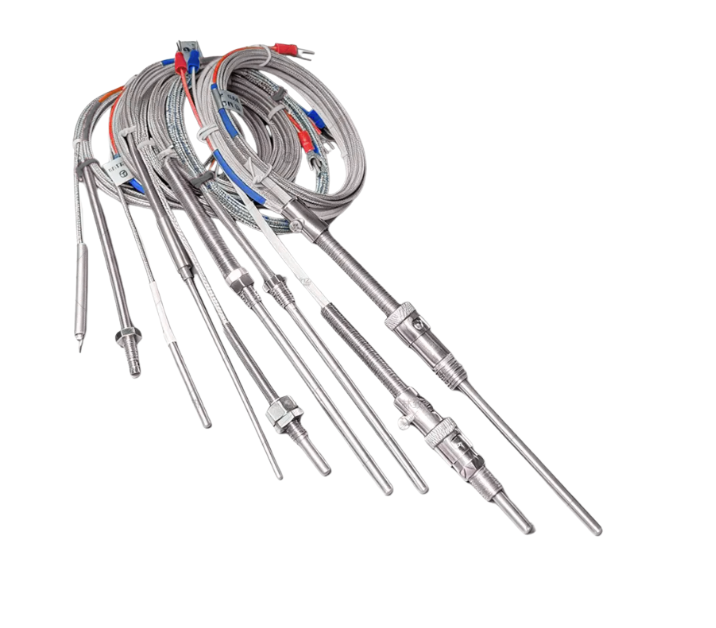
The world of industrial temperature measurement, the Type J Thermocouple (Iron-Constantan) has long been a staple. Known for its versatility and lower cost compared to Noble Metal types, it is a go-to for many manufacturing processes.
However, at Sanvi Heat, we believe that selecting the right sensor requires more than just looking at the price tag. In the unique environmental and industrial landscape of the Middle East—from the refineries of Qatar to the manufacturing hubs of the UAE—Type J sensors have specific limitations that every engineer should know
What is a Type J Thermocouple?
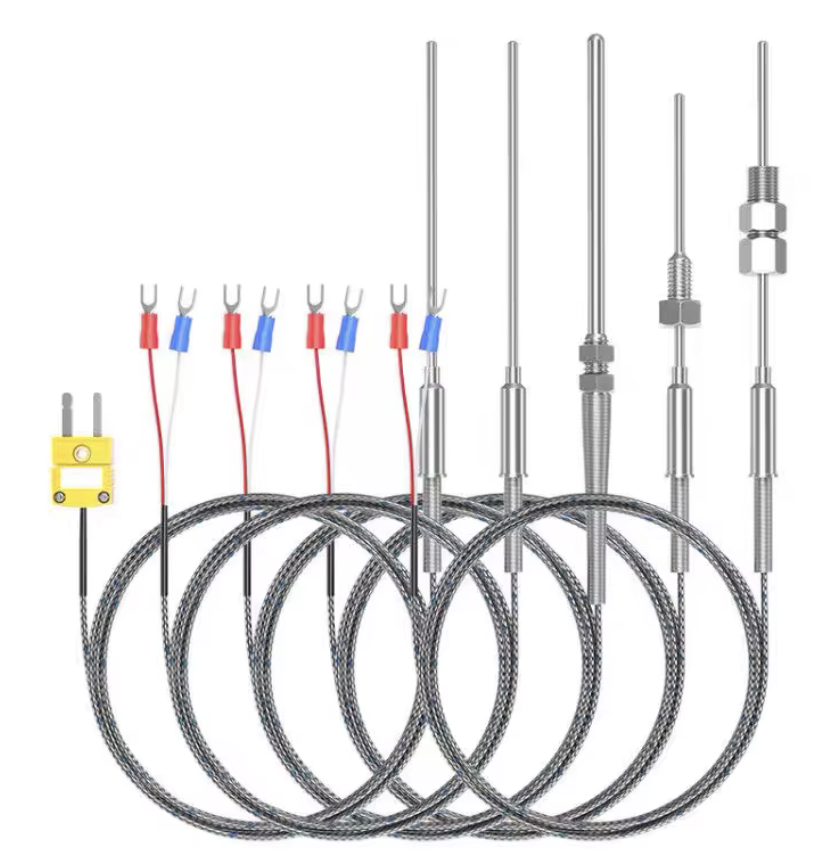
The Type J Thermocouple consists of an Iron (+) wire and a Constantan (-) (Copper-Nickel) wire. It is widely used in vacuum, oxidizing, reducing, and inert atmospheres.
The Limitations: Why “Standard” Isn’t Always “Better”
1. The “Oxidation” Problem (The Iron Factor)
The positive leg of a Type J Thermocouple is made of Iron. In the high-humidity coastal environments of the Middle East, iron is highly susceptible to oxidation (rusting).
- The Risk: Once the iron wire oxidizes, the thermocouple becomes brittle and eventually fails. More importantly, even before failure, oxidation can cause calibration drift, leading to inaccurate temperature readings that can ruin a batch of product.
2. Limited Temperature Range
While Type J is effective, it has a narrower “sweet spot” compared to Type K.
- The Limit: It is generally recommended for use up to 750°C (1382°F).
- The Warning: Exposing a Type J Thermocouple to temperatures above this for extended periods causes the iron wire to undergo a permanent physical change, leading to significant loss of accuracy. For high-temp furnaces in the metal-casting or glass industries, Type K or Type N are often superior choices.
3. Vulnerability to Moisture
In the Middle East, outdoor installations or processes involving steam face a major hurdle. If moisture enters the mineral-insulated (MI) cable of a Type J, the iron wire will corrode internally.
- Sanvi Heat Pro-Tip: Always ensure your Type J Thermocouple sensors are equipped with moisture-proof seals or transition joins if they are to be used in the humid climates of Doha, Dubai, or Muscat.
4. Not Recommended for Low-Temperature (Sub-Zero)
While many sensors handle cold well, the Type J can become brittle at cryogenic or very low temperatures. For refrigeration or LNG applications common in the region, Type T (Copper-Constantan) is much better suited.
Availability and Support in the Middle East: The Sanvi Heat Advantage
Despite these limitations, Type J remains an excellent choice for Plastics Extrusion, Injection Molding, and Low-Temp Ovens, provided they are sourced from a quality manufacturer.
At Sanvi Heat, we bridge the gap between “standard availability” and “industrial-grade reliability” in the Middle East:
- Custom Sheathing: To combat the oxidation of the iron wire, we provide Type J sensors with Inconel or Stainless Steel sheathing, offering a protective barrier against the elements.
- Local Expertise: We don’t just sell sensors; we audit your process. If a Type J isn’t the right fit for your specific heat-treat cycle, our engineers will recommend a more durable Type K or N alternative.
- Rapid Delivery: We understand that downtime in a petrochemical plant or a plastic factory is expensive. We maintain a robust stock of Type J calibration-grade wire and probes for immediate dispatch across the GCC.
Type J or Type K thermocouples: which is more sensitive?
The main difference between type J and type K (Chromel-Alumel) lies in the temperature range and electrical response. Type K has a wider temperature range, operating between -200 °C and 1.260 °C. However, type J exhibits superior sensitivity, with a coefficient of approximately 55 µV/°C, while type K has about 41 µV/°C.
This greater sensitivity means that type J produces a larger voltage variation for each degree of temperature change, which facilitates reading by control instruments in smaller heat ranges. In terms of environmental resistance, type K is more stable in oxidizing (oxygen-rich) atmospheres, while type J is preferable in vacuum environments. The cost of type J is generally lower due to the use of iron instead of the more complex nickel alloys present in type K.
| Appearance | Type J Thermocouple (Iron–Constantan) | Type K thermocouple (Cromel–Alumel) |
|---|---|---|
| temperature range | −210 °C to +760 °C | –200 °C to +1260 °C |
| Precision | Good accuracy at low temperatures, but may vary at higher temperatures. | Good accuracy across the entire operating range, with excellent repeatability. |
| Magnetic susceptibility | The iron conductor is magnetic, and may be subject to interference. | Non-magnetic, with less electromagnetic interference. |
| Cost | Generally cheaper, suitable for applications with lower thermal requirements. | Slightly higher cost, compensated for by durability and operating range. |
| Suitability of the application | Suitable for low and medium temperature, such as laboratories, plastics and food industries. | Suitable for wide range of applicationsincluding furnaces, engines and metallurgical processes. |
What are type J thermocouples used for?
Type J thermocouples are suitable for industrial processes operating in low-oxygen atmospheres. They are one of the most widely used sensors in reducing atmospheres (environments containing gases such as hydrogen and carbon monoxide) and in vacuum systems.
Its main applications include:
Plastics industryTemperature monitoring in polymer injection and extrusion machines.
food processingThermal control in industrial furnaces and storage systems.
Metal treatment: controlled heating and cooling of aluminum.
Chemical manufacturingTemperature control in reactors for resins, paints, and pharmaceuticals.
Inert materialsThermal measurement in substances such as sand, concrete, and ceramics.
Conclusion: Is Type J Right for You?
The Type J thermocouple is a reliable workhorse, but it is not “one-size-fits-all.” Its reliance on an iron leg makes it a sensitive choice for the Middle East’s humid and high-heat environments.
Are you experiencing frequent sensor failures or “ghost” temperature readings in your plant? It might be time to evaluate if the Type J is the right tool for the job.
Contact Sanvi Heat today for a technical consultation. We specialize in high-precision temperature sensors designed to survive the toughest conditions in the Middle East.
Email:sales@kfilterglobal.com, +974-50626202/31376262
Contact: WWW.Sanviheat.com