Skip to content
Minibar heater – Guest comfort is the cornerstone of premium hospitality. When a guest reaches for a cold beverage in a hotel room or serviced apartment, a lukewarm minibar can lead directly to a negative review.
Unlike household refrigerators that use noisy compressors, most commercial hotel minibars utilize absorption cooling systems. This technology operates completely silently to preserve a quiet room environment. However, when these units stop cooling, the culprit is almost always the core heating element—the minibar heater.
This technical guide covers how absorption minibar heater function, how to troubleshoot them, and how to optimize them in hotels and serviced apartments.
Understanding Absorption Cooling & The Role of the Heater
To fix a silent minibar, maintenance teams must understand that it relies on heat to create cold.
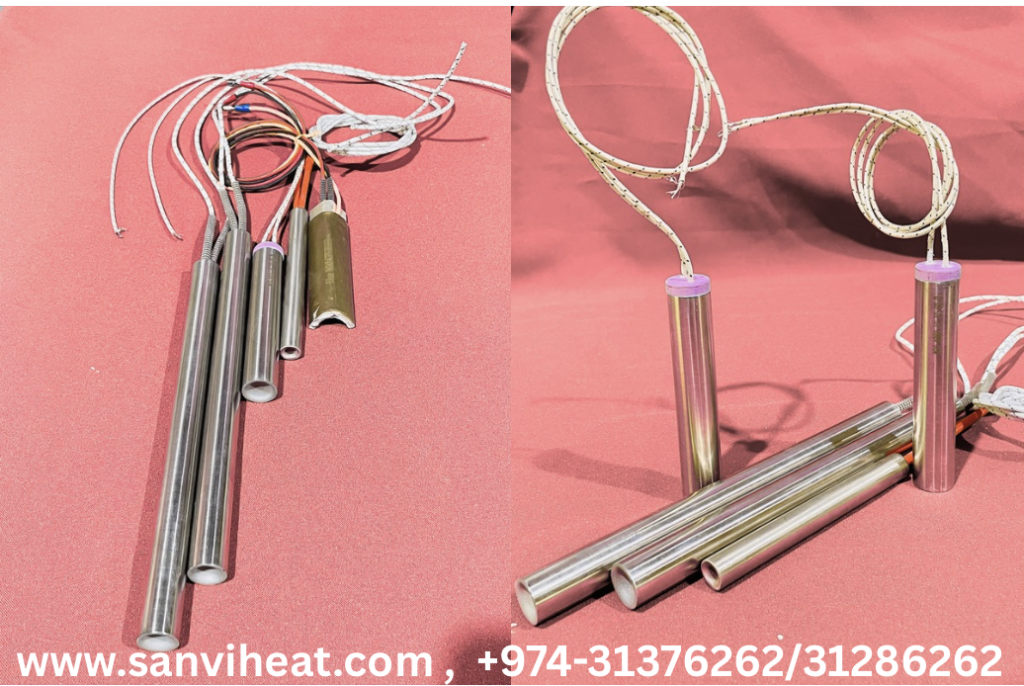
An absorption minibar uses a sealed solution of ammonia, water, and hydrogen gas. A small, high-density cartridge heater (the minibar heater) acts as the system’s thermal pump. It boils the ammonia-water solution in a generator basin, initiating a chemical evaporation cycle that absorbs heat from inside the fridge cabinet. If this internal cartridge heater burns out or loses power, the chemical cycle stops entirely, causing the unit to rapidly warm up.
Signs of a Failing Minibar Heater Element
Because absorption units are entirely silent, you cannot listen for a hum to confirm if the unit is running. Look for these warning signs instead:
- The Fridge Unit is Warm, but the Internal Light Works: This indicates the main power supply to the unit is active, but the heating element is not drawing current or heating the solution.
- The Back Grid is Completely Cold: During normal operation, the rear cooling coils of an absorption fridge should feel noticeably warm to the touch. If the back panel is stone-cold while plugged in, the heater has likely failed.
- Tripping Circuit Breakers: A ruptured heater cartridge casing can cause an electrical short to the ground, tripping the room’s residual current device (RCD) or breaker immediately upon activation.
Step-by-Step Diagnostic and Replacement Guide
Safety Protocols: Always unplug the minibar completely before inspecting the rear electrical assembly. Never puncture or cut the cooling pipes—they contain pressurized ammonia.
- Test Resistance with a Multimeter
Diagnostics
Access the rear panel of the minibar. Locate the wires running into the insulated boiler cylindrical housing. Disconnect the heater leads from the thermostat control block. Set your multimeter to Ohms (Ω) and measure the resistance across the two heater leads. An open circuit (infinity reading) confirms a burnt-out coil that must be replaced.
2. Extract the Defective Cartridge Heater
Disassembly
Allow the unit to cool if it was recently powered. Slide the old cylindrical cartridge heater straight up and out of its dedicated metal sleeve welded to the boiler tube. Do not force it forcefully; if stuck due to oxidation, apply a tiny drop of specialized penetrating fluid.
3. Match Specifications for Replacement
Procurement
Hospitality minibars commonly use heaters ranging from 60W to 90W at 220V/240V depending on cabinet size (usually 30L to 40L capacities). Ensure your replacement element matches the exact wattage and dimensions of the original part; an underpowered heater will result in poor cooling performance.
4. Insert and Wire the New Element
Installation
Slide the new heating element firmly into the boiler sleeve. Ensure it is fully seated to optimize thermal transfer. Reconnect the leads to the thermostat terminal block following your unit’s specific wiring layout.
Best Practices for Serviced Apartments and Hotels
Minibars in hospitality environments operate under harsh conditions, often tucked tight inside wooden cabinetry with minimal breathing room. Follow these preventative rules to maximize heater lifespan:
1. Ensure Adequate Ventilation (The 200 cm2 Rule)
Absorption cooling requires the hot air rising from the back of the fridge to escape, pulling cool air up from underneath. If built into a wooden console, ensure there is an intake vent at the bottom and an exhaust vent at the top, each providing at least 200 square centimeters of clear airflow area. Without ventilation, the heater will overheat and burn out prematurely.
2. Manage the Master Switch / Keycard Link
In many hotels, pulling the guest keycard completely cuts power to the room sockets. Minibars should always be wired to an unswitched, continuous power line. Constantly cycling the heating element on and off as guests enter and leave causes severe thermal shock, degrading the internal heating coils rapidly.
3. Defrost Routinely during Turnarounds
Serviced apartments with long-stay guests are prone to heavy ice buildup on the internal cooling fins. Ice acts as an insulator, forcing the internal thermostat to keep the heater turned on constantly. Establish a bi-monthly manual defrost protocol during room cleanings.
Keep Your Guest Rooms Quiet and Cold
Don’t let broken minibars impact your guest satisfaction scores or drive up your maintenance budget. Stocking a handful of universal replacement heating elements keeps your rooms operational with zero downtime.
Technical Maintenance Overview
| Parameter | Recommended Specification | Impact of Failure |
|---|---|---|
| Heater Wattage | 65W – 85W (Standard 30-40L models) | Low cooling capacity if mismatched |
| Cabinet Air Clearance | Minimum 50mm clearance at rear and top | Overheating, shortened heater life |
| Power Feed | Continuous 24/7 dedicated circuit | Accelerated thermal fatigue from cycling |
| Defrost Interval | Once every 4–6 weeks or between check-outs | Poor thermal transfer, high power draw |
Frequently Asked Questions (FAQs)
Why does my minibar smell like chemicals or ammonia?
If you detect a sharp, pungent chemical smell accompanied by a yellow residue near the boiler jacket, the cooling coils have cracked and leaked ammonia. In this scenario, the entire cooling unit is unserviceable and the fridge must be replaced immediately for guest safety.
How long do absorption minibar heaters typically last?
In a well-ventilated cabinet on a continuous power loop, a high-quality heating cartridge lasts roughly 5 to 8 years. Poor ventilation drops this lifespan to less than 2 years due to constant thermal accumulation.
921213681 RH449 _LDAG_AG_E _F_R_ _F _
921213690 RH449 _LDAG_AG_E _F_R_ _EU _
921213789 RH439LDAG
921214315 RH439LDAG
921214321 RH439LDAG
921214324 RH439LDAG
921214365 RH439 _LDAG_AG_E _F_L_ _EU _FPWOC
921214372 RH439 _LDAG_AG_E _F_R_ _EU _
921214374 RH439 _LDAG_AG_E _F_R_ _EU _TEMP
921214375 RH439 _LDAG_AG_E _F_L_T_EU _
921214376 RH439 _LDAG_AG_E _F_L_ _EU _
921214377 RH439 _LDAG_AG_E _F_R_ _SGP_
921214384 RH439 _LDAG_AG_E _F_R_ _EU _3G
921214389 RH439 _LDAG_AG_E _F_L_ _EU _FPWOC
921214399 RH439 _LDAG_AG_E _F_R_ _UAE_3GSP
921223613 RH449 _LDAG_AG_E _F_R_ _H _
921223631 RH449LDAG
921223633 RH449LDAG
921223674 RH449LDAG
921223689 RH449LDAG
921223694 RH449LDAG
921223742 RH449 _LDAG_AG_E _F_R_T_RUS_SP
921223755 RH449 _LDAG_AG_E _F_L_ _EU _
921223762 RH449 _LDAG_AG_E _F_R_ _EU _3G
921223771 RH449LDAG
921223772 RH449 _LDAG_AG_E _F_R_ _TR _FPWOC
921223773 RH449 _LDAG_AG_E _F_L_ _TR _FPWOC
921223776 RH449 _LDAG_AG_E _F_R_ _EU _H SP
921223782 RH449 _LDAG_AG_E _F_R_ _EU _RD_BF
921223783 RH449 _LDAG_AG_E _F_L_ _EU _RD_BF
921223798 RH449 _LDAG_AG_E _F_R_ _EU _SP
921223799 RH449LDAG
921223907 RH569 _LDFS_AG_E _F_R_S_EU _
921223911 RH569 _LDFS_AG_E _F_R_ _EU _
921223912 RH569 _LDFS_AG_E _F_R_ _UAE_
921223917 RH569LDFS
921224501 RH439 _LDAG_AG_E _F_R_ _RUS_FPWOC
921224510 RH439LDAG
921224521 RH439 _LDAG_AG_E _F_R_ _EU _RD
921224523 RH439 _LDAG_AG_E _F_R_ _EU _H
921224529 RH439 _LDAG_AG_E _F_L_ _EU _
921224530 RH439 _LDAG_AG_E _F_L_ _EU _H
921224537 RH439 _LDAG_AG_E _F_R_T_UAE_SP
921224538 RH439 _LDAG_AG_E _F_L_T_UAE_SP
921225401 RH449 _LDAG_AG_E _F_R_ _H _
921225422 RH449 _LDAG_AG_E _F_L_ _EU _
921225424 RH449 _LDAG_AG_E _F_L_ _EU _3G
921225431 RH449 _LDAG_AG_E _F_R_T_EU _FPWOC
921225433 RH449 _LDAG_AG_E _F_R_ _H _HANDL
921225434 RH449 _LDAG_AG_E _F_L_ _H