Skip to content
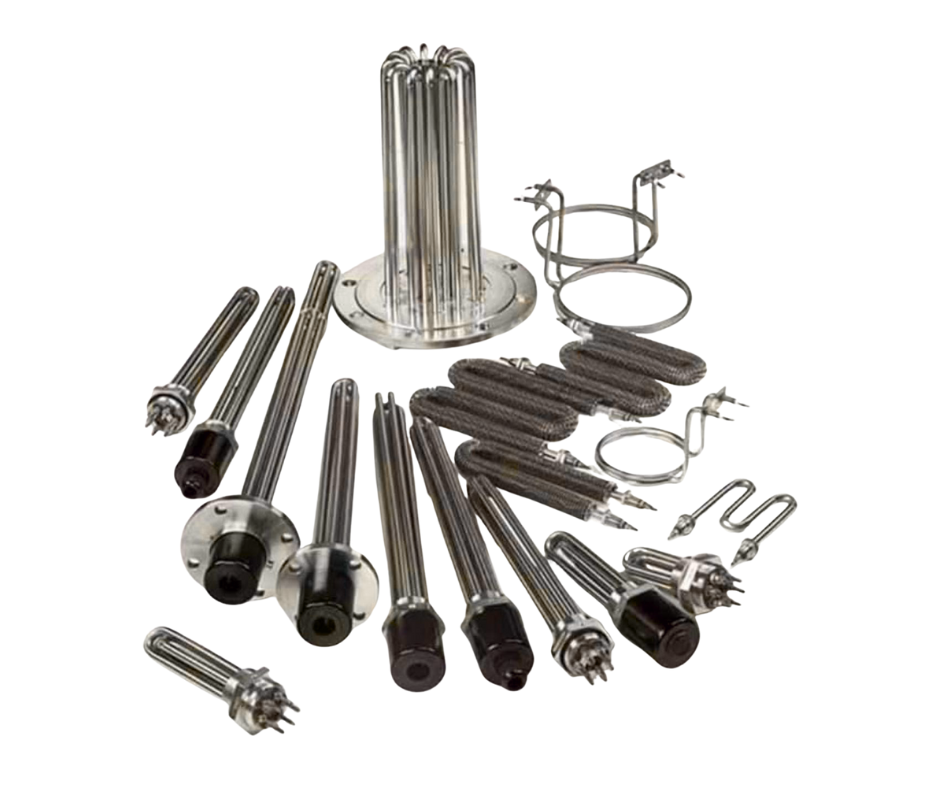
It’s a common question that crosses the minds of many engineers and procurement managers. Because cartridge heater is incredibly efficient, reliable, and compact, it’s tempting to use them across all types of industrial heating setups.
The short answer is yes, but with crucial design modifications.
If you take a standard Cartridge Heater Elements designed for a metal block and run it bare in the open air, it will overheat and burn out within minutes. At Sanvi Heat, we specialize in engineering thermal solutions that bridge this gap safely. Let’s break down why standard cartridge elements fail in air, and exactly how they must be modified for air heating applications.
The Science: Why “Air” Changes Everything
The primary difference between heating a solid metal block and heating air comes down to thermal conductivity and heat transfer efficiency.
- In Metal (Conduction): When a cartridge heater is snugly fitted into a drilled metal hole, the metal acts as a massive heat sink. It rapidly draws heat away from the element’s surface.
- In Air (Convection): Air is a terrible conductor of heat. It forms a stagnant thermal barrier layer around the heater. Without a tight physical mass to absorb the energy, the heat builds up inside the cartridge sheath, forcing the internal resistance wire to glow red-hot and rapidly fail.
To adapt a cartridge heater for air, we must drastically alter its surface load (watt density) and maximize its surface area.
Key Requirements for Using Cartridge Heaters in Air Heating
If your application demands a cartridge-style configuration for gas or air heating, the heating element must be built using one of two specific engineering pathways:
1. Drastically Lowering the Watt Density (Low Surface Load)
A standard cartridge heater for metal blocks often operates at a high watt density (e.g., 20–30 Watts per square centimeter). For open-air or stagnant air heating, the watt density must be scaled down dramatically—often to 1 to 2 Watts per square centimeter (approximately 1 kW per meter of length).
By lowering the surface load, the internal magnesium oxide (MgO) insulation and resistance wire can safely dissipate heat into the air without reaching destructive, runaway temperatures.
2. Adding Stainless Steel Fins (Finned tubular heaters)
When higher heating capacities or faster thermal response times are needed in air duct or forced-convection environments, standard cylindrical shapes don’t cut it. The solution is a Finned Cartridge Heater.
By tightly wrapping a continuous stainless steel fin around the outer sheath, we physically expand the surface area of the heater by several hundred percent. When a fan or air stream passes over these fins, it strips the heat away rapidly, keeping the internal core at a stable, safe operating temperature.
Ideal Applications for Air-Rated Cartridge Heaters
When properly designed with low watt density or cooling fins, cartridge heaters excel in several specialized air heating environments:
- Enclosure & Cabinet Heating: Preventing condensation and moisture buildup in sensitive industrial control panels or electronic cabinets.
- Drying & Curing Ovens: Providing localized, compact radiant or convective heat loops in small-scale industrial baking or curing processes.
- Forced Air Ducts: Integrating finned elements into small air passages or hot-air guns for precise, localized high-temperature air streams.
- Packaging Machinery: Pre-heating air lines used for shrinking plastic films or activating adhesives.
Engineering Checklist for Safe Air Heating
Before deploying a cartridge element into an air heating application, ensure your setup checks the following boxes:
- Forced Airflow is Best: If possible, always use a fan or blower to maintain consistent airflow across the element. Moving air exponentially improves the heat transfer coefficient compared to stagnant air.
- Precise Temperature Control: Pair the element with an external thermocouple or RTD sensor and a PID controller. Avoid loose “on-off” power cycling to prevent thermal fatigue on the internal elements.
- Moisture & Contamination Seals: Because air contains humidity and ambient contaminants, the electrical termination end must be sealed with high-temperature epoxy or silicone to protect the hygroscopic MgO insulation inside from short-circuiting.
Custom Thermal Engineering by Sanvi Heat
Using the wrong heater configuration for air heating doesn’t just shorten the equipment’s lifespan—it poses a serious industrial safety hazard.
At Sanvi Heat, we don’t believe in one-size-fits-all components. We custom-manufacture low-watt-density cartridge elements and high-efficiency finned cartridge heaters tailored specifically to your airflow rates, target temperatures, and spatial limitations.