Skip to content

In a powder coating line, application gets most of the visual attention—but the curing oven is what determines whether the finish actually performs. Even the best electrostatic spray gun and premium architectural or industrial powder cannot compensate for poor heat distribution, inaccurate dwell times, or failing heating elements.
Across Saudi Arabia and the wider Middle East—from industrial hubs in Riyadh, Dammam, Jubail, and Jeddah to Qatar, the UAE, Oman, Kuwait, and Bahrain—metal fabricators, aluminum extruders, and heavy steel coaters rely on consistent thermal curing to protect parts against intense UV radiation, extreme ambient heat, abrasive desert dust, and coastal humidity.
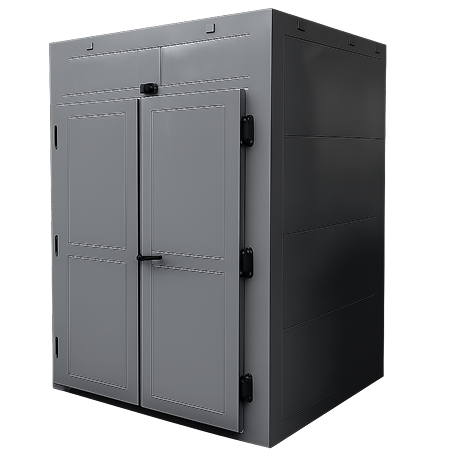
At Sanvi Heat, we manufacture, supply, and maintain industrial electrical powder coating ovens and high-grade electrical heating elements engineered to deliver repeatable curing quality across Saudi Arabia and the Middle East.
What Happens Inside a Powder Coating Curing Oven?
Curing is not simply “drying” paint—it is a controlled thermal chemical reaction. When coated metal parts enter an electrical curing oven, the powder goes through four distinct stages:
- Melting: As the substrate warms up, solid powder particles begin to soften and melt.
- Flow & Leveling: The molten powder spreads across the metal surface to form a smooth, continuous film without pinholes or excessive orange peel.
- Gelation: Polymer chains start linking together, increasing viscosity and locking the coating thickness in place.
Cross-Linking (Full Cure): At the target Part Metal Temperature (PMT)—typically 180°C to 200°C for standard thermoset powders—the resin fully cross-links into a hard, durable, chemical- and impact-resistant finish
Curing Oven Fundamentals That Control Finish Quality
Whether you operate a batch box oven for custom steel fabrication or a continuous conveyor oven for high-volume production, four thermal fundamentals govern coating quality:
1. Air Temperature vs. Part Metal Temperature (PMT)
One of the most common mistakes in powder coating shops is confusing oven air temperature with Part Metal Temperature (PMT).
- A thin sheet-metal bracket heats up in minutes, whereas a heavy structural steel beam or thick aluminum extrusion takes significantly longer to reach curing temperature.
- Curing clocks only start once the metal itself reaches the powder manufacturer’s required PMT—not the moment the oven door closes.
2. Uniform Airflow and Heat Distribution
Hot air naturally rises. Without balanced high-volume circulation fans and properly designed supply/return ducting, an oven develops hot spots near the ceiling and cold zones near the floor.
- Cold spots cause under-curing (chalking, poor adhesion, brittle impact failure).
- Hot spots cause over-baking (yellowing on whites/light colors, gloss loss, and inter-coat adhesion issues).
3. Clean, Responsive Electrical Heating
Electrical powder coating ovens are widely favored across modern Middle Eastern coating facilities because they deliver clean, combustion-free heat and tight temperature modulation.
- Paired with PID temperature controllers and solid-state relays, high-efficiency tubular and finned tubular heating elements respond rapidly to load changes when cold racks enter the chamber.
- Clean electric heat prevents soot, moisture, or combustion by-products from contaminating sensitive architectural or decorative finishes.
4. Chamber Insulation and Door Sealing
In high-ambient workshops across Saudi Arabia and the Gulf, poor insulation wastes electricity and destabilizes internal temperatures. High-density mineral/rock wool insulation, thermal-break panel joints, and intact high-temperature silicone door seals keep heat locked inside the curing zone where it belongs.
Common Curing Defects & How to Prevent Them
| Coating Defect | Likely Oven Cause | Corrective Action |
|---|---|---|
| Poor Adhesion / Flaking | Under-cured finish due to insufficient dwell time or low PMT on heavy parts | Verify PMT with an oven data logger; extend soak time for thick substrates |
| Color Shift or Yellowing | Over-baking or localized hot spots near heating banks | Check airflow baffles, calibrate thermocouples, and verify PID settings |
| Pinholes or Outgassing | Rapid surface skinning before trapped air/moisture escapes porous substrates | Use a controlled pre-heat cycle or adjust ramp-up temperature |
| Uneven Gloss Across Rack | Poor air circulation or failed heating elements on one side of the oven | Test heating element amp draw and inspect blower fan rotation/belts |
Why Electrical Heating Elements Are Critical to Curing Consistency
Your oven’s temperature stability is only as reliable as the heating elements inside its plenum. Premature element burnout, sagging coils, or oxidized sheaths reduce total kilowatt output, forcing longer heat-up cycles and causing uneven curing across batches.
Sanvi Heat supplies industrial-grade electrical heating solutions tailored for Middle Eastern operating conditions, including:
- Finned Tubular & Straight/U-Bend Tubular Heating Elements for high-efficiency convection air heating.
- Duct & Open-Coil Air Heaters designed for rapid heat transfer in recirculating oven plenums.
- Cartridge, Band (Mica & Ceramic), Immersion, and Flange Heaters for pre-treatment tanks, drying ovens, and auxiliary industrial machinery.
- Industrial Thermocouples & Control Components to ensure accurate temperature feedback.
Supporting Powder Coaters Across Saudi Arabia & the Middle East
From new coating line installations to urgent replacement heating elements and preventive maintenance, Sanvi Heat partners with industrial workshops, fabricators, and manufacturers across Saudi Arabia (Riyadh, Dammam, Jubail, Jeddah, Al Khobar), Qatar, and the wider GCC / Middle East.
- Industrial Electrical Powder Coating Ovens: Custom and standard batch or conveyor ovens engineered for thermal uniformity and energy efficiency.
- High-Quality Electrical Heating Elements: Standard and custom-built elements matched to your exact voltage, wattage, sheath alloy (Stainless Steel / Incoloy), and mounting dimensions.
- Maintenance & Technical Support: Element inspection, airflow optimization, sensor calibration, and thermal troubleshooting to minimize costly line downtime.
Frequently Asked Questions (FAQ)
What is the standard curing temperature for powder coating ovens?
Most standard polyester and epoxy-polyester powders cure at a Part Metal Temperature (PMT) of 180°C to 200°C for 10 to 20 minutes, while low-temperature powders cure at 130°C to 160°C. Always verify the exact cure schedule on your powder technical data sheet.
Why choose an electrical powder coating oven for facilities in Saudi Arabia and the GCC?
Electrical ovens offer precise digital temperature control, clean residue-free curing, lower mechanical complexity, and reliable performance in demanding industrial environments.
How can I order replacement heating elements for my existing curing oven?
Share your element’s voltage, wattage, overall length, tube diameter, sheath material, or a clear photo/drawing with Sanvi Heat to match or custom-manufacture an exact replacement.
Upgrade Your Curing Reliability with Sanvi Heat
Looking to install a new industrial electrical powder coating oven, source high-quality electrical heating elements, or improve curing consistency in Saudi Arabia or the Middle East? Contact Sanvi Heat with your oven dimensions, workload details, or element specifications for expert support and a tailored quotation.