Skip to content
Efficiency, Versatility, and Safety
Electric Duct Heater are the unsung heroes of modern HVAC systems. Whether you are looking to warm up a chilly office or manage the air quality in an industrial plant, these devices offer a convenient, affordable, and highly effectivesolution.
For decades, professional HVAC contractors have relied on electric duct heaters for residential, commercial, and industrial applications. At Sanvi Heat, we believe that understanding how these systems work is the first step toward achieving perfect indoor climate control.
Versatile Solutions: Where Electric Duct Heaters Shine
The core purpose of an electric duct heaters are simple: to transfer heat directly to the air flowing through your ventilation system. Because of their adaptability, they are used in a wide variety of settings:
- Forced Air Furnaces: Boosting the primary heating source for larger buildings.
- Heat Recovery Ventilation (HRV): Pre-heating incoming fresh air to maintain comfort.
- Tempering Outdoor Air: Taking the “bite” out of cold external air before it enters the room.
- Makeup Air Systems: Replacing air exhausted by industrial processes with warm, fresh air.
Choosing Your Core: Tubular vs. Open Coil Elements
Not all heating elements are created equal. The environment inside your ducts determines which technology you should choose:
1. Tubular Elements (The Rugged Choice)
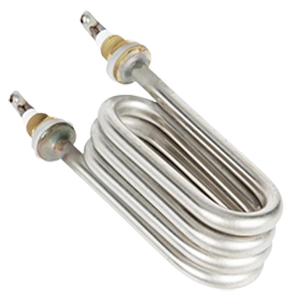
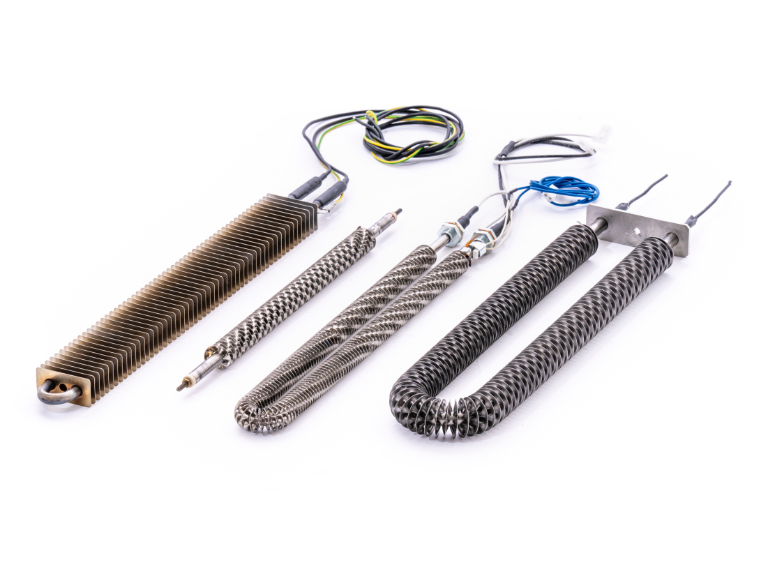
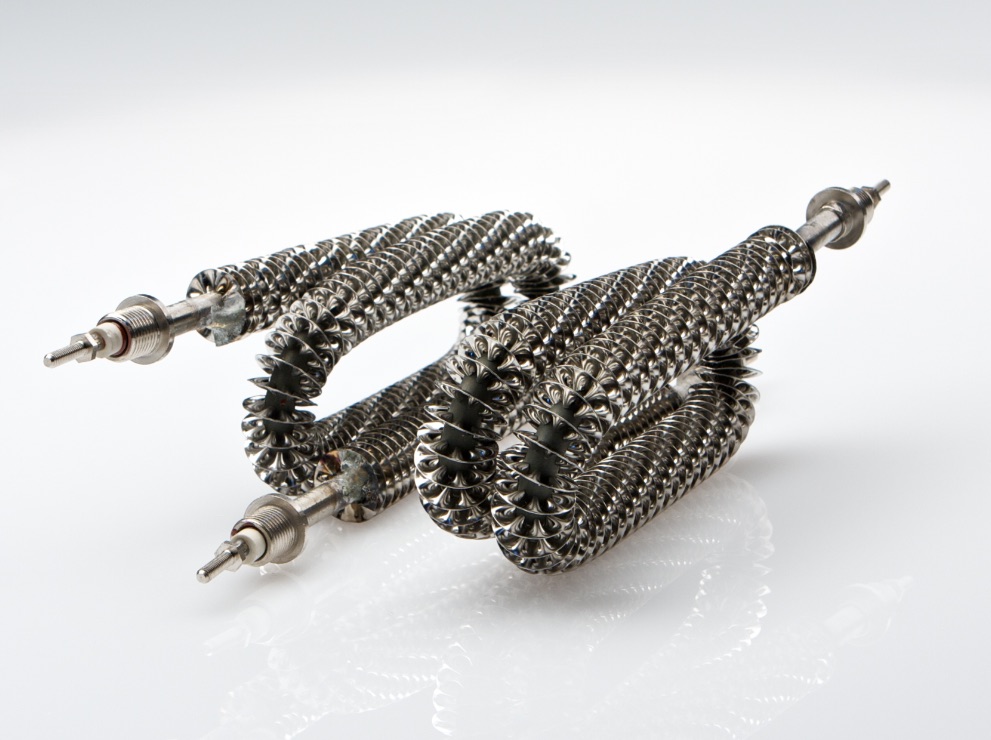
Tubular elements are the heavy-duty workhorses of the industry. They are encased in a protective sheath, making them ideal for industrial environments where the air might contain dust, moisture, or light contaminants.
2. Open Coil Elements (The Efficient Choice)
Typically made of a nickel-chrome composite, open-coil elements are the most popular choice for standard HVAC systems.
- Why choose them? They are more cost-effective and highly efficient.
- Airflow Advantage: They require less airflow to operate safely compared to tubular designs, often resulting in a longer operating life when used in filtered air environments.
Staged vs. Modulating: Which is Smarter?
How you control your heat is just as important as how you generate it.
- Staged (On/Off) Control: Best for simple room heating controlled by a standard wall thermostat. It’s a straightforward “all or nothing” approach.
- Modulating Control (The Gold Standard): If you want to maintain a precise temperature within the duct, modulation is the way to go. By using only the exact amount of energy needed to hit a set point, modulating heaters slash energy costs and provide much more consistent comfort.
Modern heaters are incredibly flexible, interfacing with everything from basic electronic controllers to sophisticated Direct Digital Control (DDC) systems for large-scale building management.
Safety First: Eliminating Airflow Risks
Because electric duct heaters generate intense heat, they rely on constant airflow to stay cool. If a fan fails or a duct becomes blocked, temperatures can spike dangerously fast.
At Sanvi Heat, we prioritize safety by utilizing industry-leading standards, including:
- Automatic Thermal Cut-offs: Disconnects power immediately if temperatures exceed safe limits.
- Manual Reset Cut-offs: Acts as a redundant safety layer, requiring a manual check before the system can restart
Your 3-Step Selection Guide
Ready to upgrade your system? Follow this simple framework to find the perfect match:
| Step | Action | Key Detail |
| 1 | Calculate Capacity | Determine the required kW (kilowatts) and your specific voltage/phase. |
| 2 | Measure Twice | Take exact measurements of your duct dimensions to ensure a snug, leak-free fit. |
| 3 | Select Control Type | Decide between Staged for simplicity or Modulating for precision and savings. |
Maximizing ROI: How Industrial Duct Heaters Drive Energy Efficiency
In today’s industrial landscape, energy efficiency isn’t just a “green” goal—it is a financial necessity. Industrial duct heaters have emerged as a cornerstone for facilities looking to optimize their HVAC performance while slashing overhead costs.
By strategically integrating these heaters into your airflow systems, you can transform your building’s thermal management from a budget drain into a streamlined operation. Here are the key advantages of making the switch.
1. Precision Distribution: Ending the “Cold Spot” Cycle
Traditional heating methods often struggle to warm large-scale facilities evenly, leading to “thermostat wars” and wasted energy. Industrial duct heaters solve this through uniform heat distribution.
- Consistency: By heating the air directly within the ventilation stream, you ensure that every square foot of your facility reaches the target temperature simultaneously.
- Reduced Loss: Because the heat is delivered exactly where the air is already flowing, you eliminate the energy loss often associated with standalone space heaters or poorly integrated boilers
2. High Thermal Efficiency, Low Environmental Impact
Modern duct heaters are engineered for maximum heat transfer. Unlike older systems that lose significant energy through combustion or piping, electric duct heaters convert nearly 100% of their energy into heat.
- Minimized Waste: High thermal efficiency means your utility bills reflect actual warmth, not wasted heat escaping through the system.
- Sustainability: Lower energy consumption directly correlates to a reduced carbon footprint. For businesses committed to ESG (Environmental, Social, and Governance) goals, duct heaters represent a cleaner, more sustainable heating choice.
3. Smart Integration and Real-Time Optimization
The “set it and forget it” era of heating is over. Today’s industrial duct heaters are built to be part of a Smart Building ecosystem.
The Digital Edge: Many modern units feature intelligent controls and sensors that allow facilities managers to monitor performance in real-time.
By adjusting heat output based on actual demand rather than fixed schedules, these smart systems ensure you never pay for a kilowatt of heat you don’t need. Whether you are interfacing with a building-wide DDC system or using localized modulating controls, the result is the same: enhanced operational efficiency.
4. Seamless HVAC duct heater Synergy
One of the most cost-effective ways to improve a building’s performance is to work with what you already have. Duct heaters are designed to integrate seamlessly into existing HVAC frameworks.
This synergy allows facilities to:
- Maintain optimal temperature levels without a total system overhaul.
- Avoid the massive capital expenditure of traditional central heating replacements.
- Bridge the gap between ventilation and climate control with a single, streamlined solution.
https://www.facebook.com/sanviheat