Skip to content
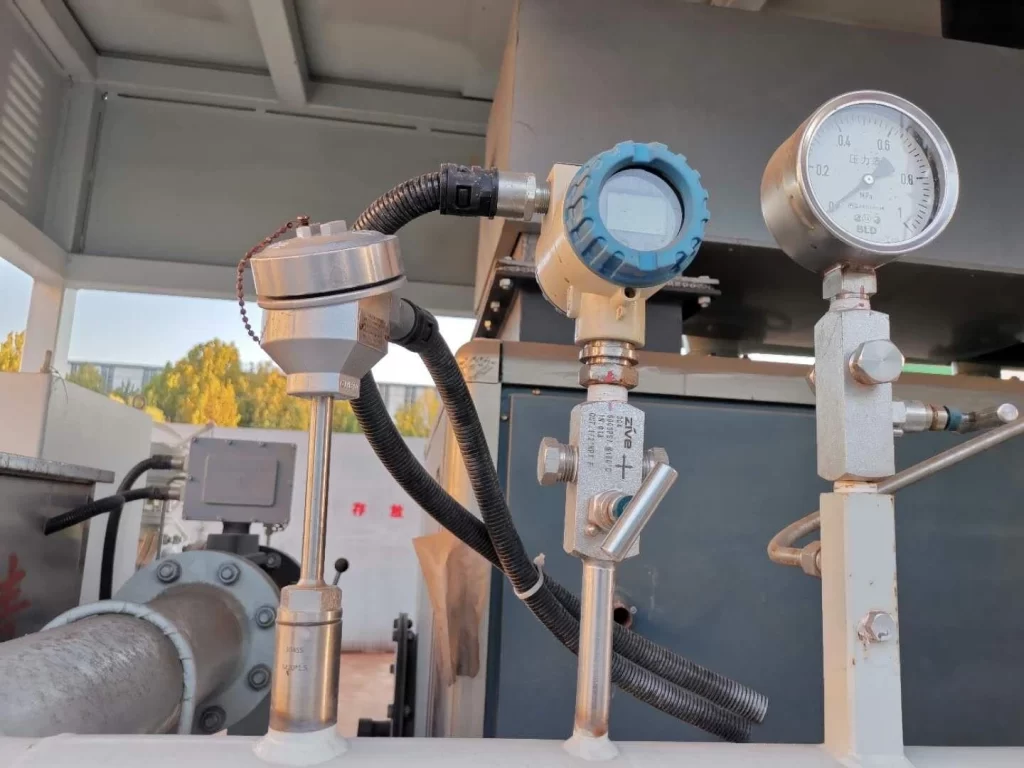
Installing industrial temperature sensors like RTDs or thermocouples requires more than just placing them in a process stream and plugging them in. Even the most accurate sensor will give poor readings if the installation allows external factors—like ambient air temperature or pipe walls—to distort the measurement.
To get the most accurate and reliable data from your sensors, keep these practical installation principles in mind.
1. Optimize the Immersion Depth
One of the most common causes of inaccurate readings is thermal conduction. If a sensor is not inserted deeply enough, heat travels up the sensor stem toward the colder ambient air outside the pipe. This cools down the sensor tip and causes it to read lower than the actual process temperature.
- For liquids: As a rule of thumb, the sensor tip should be immersed to a depth of at least 5 to 10 times the outer diameter of the protection tube or thermowell.
- For gases and steam: Because gas transfers heat less efficiently than liquid, you need deeper immersion—typically 15 to 20 times the sensor diameter.
- Positioning: Ideally, the tip of the sensor should sit right in the center third of the pipe, where the fluid velocity is highest and the temperature is most uniform.
2. Orient the Sensor Against the Flow
How you position the sensor relative to the fluid flow matters.
- Elbow installations: Whenever possible, install the sensor in a pipe elbow, facing directly into the flow. This ensures maximum fluid contact with the sensor tip and provides an accurate, real-time reading.
- Perpendicular installations: If you must install the sensor perpendicular to a straight run of pipe, ensure the immersion depth is correct and that the tip doesn’t sit in a stagnant boundary layer near the pipe wall.
3. Use Thermal Transfer Compound
If you are using a thermowell (the protective sleeve that shields the sensor from pressure and corrosion), an air gap will naturally exist between the inside wall of the thermowell and the sensor itself. Air is a poor conductor of heat, which slows down the sensor’s response time and reduces accuracy.
- Fill this gap with a high-quality thermal paste or heat-transfer compound.
- This paste displaces the air and creates a solid thermal bridge, ensuring the sensor registers temperature shifts almost instantly. Just make sure the paste you choose is rated for your process’s specific temperature range.
4. Insulate the Installation Point
Ambient air temperature can heavily influence your sensor, especially if the pipe is outdoors or in a drafty factory environment. If the pipe wall is hot but the outside air is cold, heat will bleed away from the installation boss.
- Wrap the pipe, the mounting boss, and the base of the thermowell in industrial insulation.
- This isolates the measurement zone from external weather and ambient room temperatures, ensuring the sensor only measures what is happening inside the pipe.
5. Prevent Electrical Interference (Noise)
Thermocouples produce tiny millivolt signals, and RTDs rely on precise resistance measurements. Both are highly susceptible to electromagnetic interference (EMI) from nearby motors, heavy machinery, or high-voltage power lines.
- Use shielded cables: Always use twisted-pair, shielded extension wires to connect your sensors to your control system.
- Separate your routing: Run sensor signal wires in separate conduits or trays, well away from high-voltage power cables.
- Ground correctly: Ground the cable shield at one end only (usually at the control panel or transmitter) to prevent ground loops, which can introduce erratic readings.
6. Consider a Head-Mounted Transmitter
If your sensor is located a long distance from the control room, running long lengths of fragile sensor wire (especially thermocouple extension wire) increases the risk of signal degradation and interference.
Whenever possible, use a head-mounted temperature transmitter.
This converts the raw, sensitive sensor signal into a robust 4-20mA, HART, or digital signal right at the measurement point. This signal can then travel long distances to your PLC or DCS without losing accuracy.