Skip to content
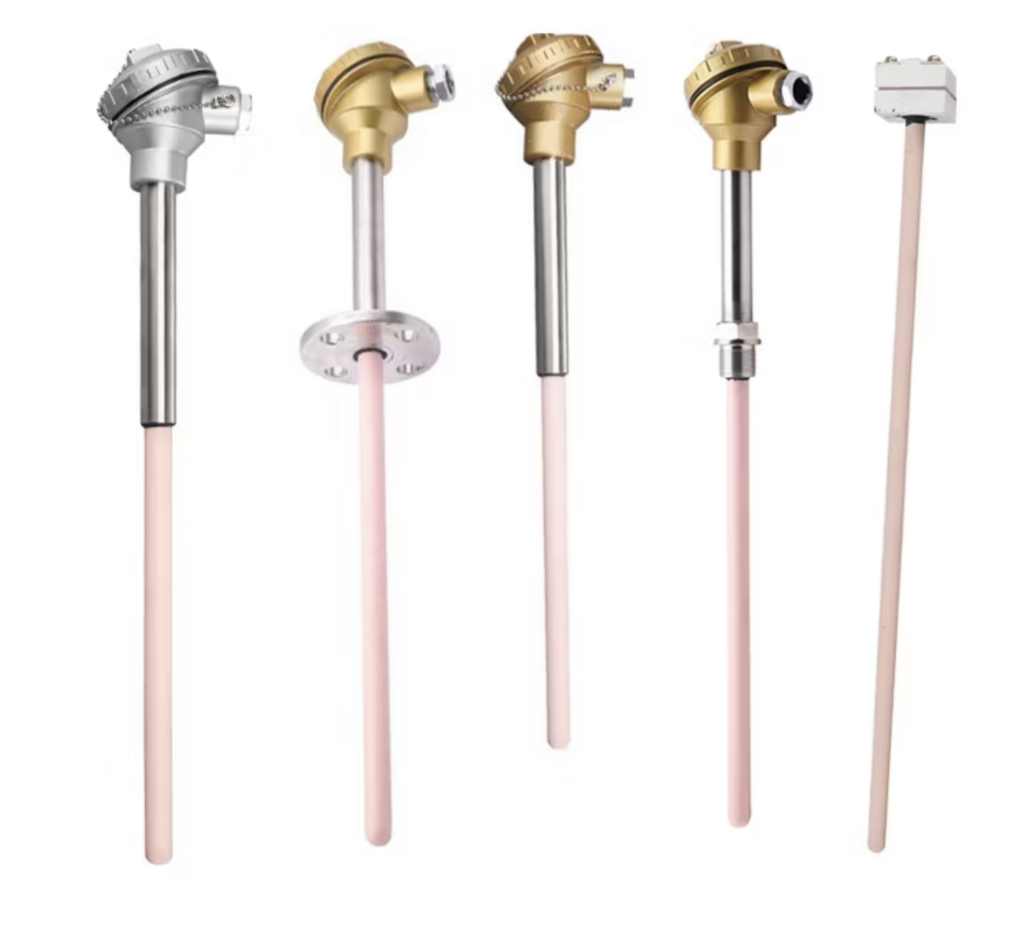
Choosing the right temperature sensor is one of the most critical decisions when designing or maintaining industrial heating systems. At Sanvi Heat, we frequently hear questions about why K-type Thermocouple are the industry standard across the Middle East and Africa. The answer lies in their versatility, though like any tool, they have their own specific requirements.

What is a K-Type Thermocouple?
At its simplest, a thermocouple is a sensor made by joining two different metals. These sensors operate on the Seebeck effect: when the junction of these two metals is exposed to a temperature difference, it generates a small electrical voltage that we can measure to determine the exact temperature.
A K-type thermocouple specifically uses chromel (nickel-chromium) and alumel (nickel-aluminum). They are widely considered the “general-purpose” sensor of the industrial world because of their incredible range—they can accurately measure temperatures from -200°C all the way up to +1350°C.
Why They Are a Go-To for Industry
As a leading manufacturer and supplier serving demanding environments across the Middle East and Africa, we rely on K-type sensors for several practical reasons:
- Resistance to Oxidation: They perform much better than J-type thermocouples at temperatures above 500°C. In high-heat environments, they stay accurate longer and require less frequent replacement.
- Fast Response Times: Because they are physically robust and simple in design, they provide near-instant feedback on temperature shifts, which is vital for process safety.
- Versatility: They are compatible with a wide range of environments, including gases, liquids, and dry heat applications.
Considerations for Best Performance
While the K-type is a workhorse, it is not a “one size fits all” solution. To ensure you get the longest life out of your sensors, keep these two limitations in mind:
- Avoid High-Sulfur Environments: Sulfur can cause “green rot,” which damages the sensor electrodes and leads to inaccurate readings.
- Watch the Atmosphere: In low-oxygen or “reducing” atmospheres, K-type sensors can experience faster aging compared to noble metal thermocouples.
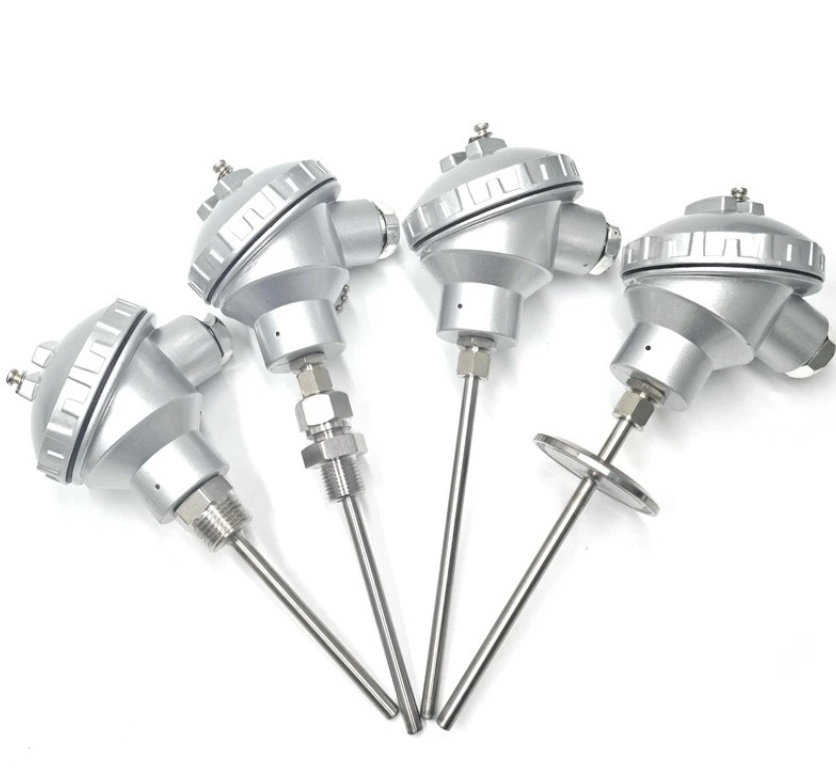
K-Type vs. J-Type: Which Should You Choose?
This is a common debate in our field. If your application consistently operates below 600°C, a J-type thermocouple is a reliable and cost-effective choice. However, if your process pushes beyond that threshold or deals with oxidative stress, the K-type is the much better long-term investment.
At Sanvi Heat, we believe that efficiency starts with choosing the right components for your specific working conditions. The K-type thermocouple is a dependable standard that, when applied correctly, offers years of stable operation.If you are planning a new project or upgrading an existing production line, we are happy to help you select the exact sensor configuration that fits your facility’s needs
General & Operational FAQs
How does a thermocouple actually measure temperature?
A thermocouple works on a principle called the Seebeck effect. It consists of two different metal wires joined together at one end, known as the “hot” or measuring junction. When there is a temperature difference between this hot junction and the open ends (the “cold” or reference junction), a tiny millivolt (mV) voltage is generated. Your control system measures this voltage and converts it into a temperature reading
What is the difference between a Grounded and Ungrounded junction?
This refers to how the internal wires interact with the outer protective metal sheath:
Grounded: The wire junction is welded directly into the tip of the outer metal sheath. This provides a very fast response time because heat transfers directly to the wires, but it leaves the sensor highly vulnerable to electrical noise and ground loops.
Ungrounded: The wire junction is physically isolated from the sheath, usually surrounded by compressed magnesium oxide powder. It has a slightly slower response time but is strongly protected against electrical interference, making it the standard choice for most industrial PLC systems.
Why can’t I use regular copper wire to extend my thermocouple?
Thermocouples require specific extension or compensation wires that match the alloys of the thermocouple itself (e.g., Chromel and Alumel for Type K). If you connect standard copper wire to a thermocouple, you accidentally create a new thermocouple junction right at that connection terminal. This secondary junction will alter the voltage signal, causing massive reading errors.
_______________________________________________________________________________________
Troubleshooting & Common Failures
My temperature reading is dropping when the process gets hotter. Why?
This is almost always a classic reversed polarity error. If the positive and negative lead wires are swapped during installation, the controller will read the temperature differential backward.
Note on Color Codes: In the American ANSI standard, red is always negative for thermocouples. This catches many technicians off guard, as they intuitively assume red means positive
What causes a thermocouple reading to “drift” over time?
Calibration drift—where the sensor slowly loses accuracy without failing completely—is usually caused by two things:
Chemical Contamination: At high temperatures, trace impurities or molecules from the surrounding process atmosphere (like sulfur or carbon) leach through the sheath and alter the chemical makeup of the metal wires.
Thermal Fatigue: Continuous, extreme temperature cycling changes the physical crystal structure of the alloys, subtly altering the voltage they produce at specific temperatures.
How do I know if my thermocouple is completely broken?
You can perform a quick diagnostic test using a basic digital multimeter:
Check Continuity (Ohms): Set your meter to resistance. A healthy thermocouple should show a very low resistance reading (usually under 5 to 20 ohms, depending on wire length). If the meter reads “OL” or open, the internal wire loop is broken
Check Voltage (mV): Set your meter to millivolts (mV). Connect it to the sensor leads and apply heat to the sensor tip with a lighter or heat gun. If the millivolt reading rises steadily as heat is applied, the sensor’s thermoelectric property is still functioning
_______________________________________________________________________________________
Selection & Comparison
Should I choose a Thermocouple or an RTD (Pt100)?
It depends entirely on your temperature range, accuracy requirements, and environmental conditions
| Feature | Thermocouples (e.g., Type K, J) | RTDs (e.g., Pt100) |
|---|---|---|
| Temperature Range | Extremely broad (-200°C to over 1700°C) | Narrower (-200°C to ~650°C) |
| Accuracy | Moderate (typically ±1.1°C to ±2.2°C) | Very High (typically ±0.1°C to ±0.3°C) |
| Durability | Highly rugged; excels under heavy vibration and shock | Fragile; internal ceramic/glass elements can break |
| Cost | Generally more economical | More expensive due to platinum elements |
_______________________________________________________________________________________