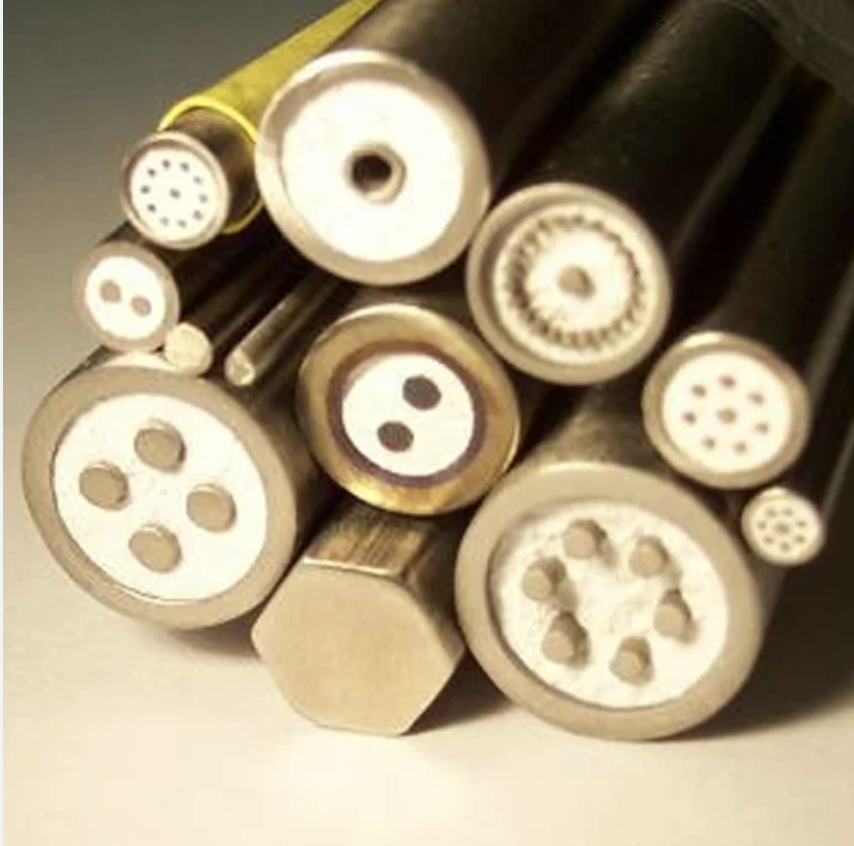
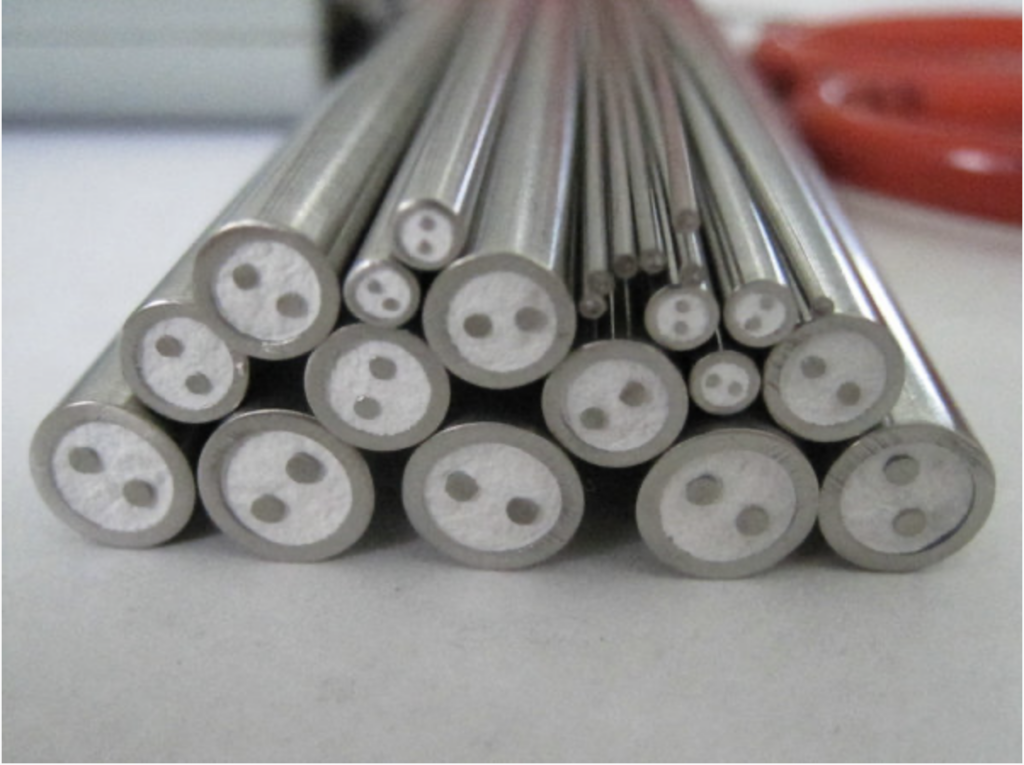
Choosing the right sheath material for a corrosive environment comes down to balancing chemical compatibility, maximum operating temperature, and cost. Because the Thermocouple sheath is the only barrier protecting the internal thermocouple wires from being destroyed by the process, making the wrong choice can lead to rapid sensor failure or drift.
Sanvi Heat is a step-by-step breakdown of how to select the right material, along with the most reliable options used in the industry today.
1. Identify the Specific Chemistry of the Environment
“Corrosive” can mean many things. A material that survives easily in a highly acidic liquid might crumble in a high-temperature sulfur gas. You must pinpoint:
The specific chemicals present: Are you dealing with acids (hydrochloric, sulfuric, nitric), alkalis, chlorine, or sulfur?
The presence of oxygen: Is it an oxidizing atmosphere (lots of oxygen) or a reducing atmosphere (oxygen-depleted)?
The physical state: Is it a stagnant liquid, a high-velocity gas, or a slurry with abrasive particles?
2. Match the Material to Your Temperature and Chemical Profile
Standard Stainless Steels (Up to 850°C)
For mild to moderate corrosion at lower industrial temperatures, stainless steel is the most economical choice.
- 316 Stainless Steel: The baseline standard for industrial environments. The addition of molybdenum gives it excellent resistance to pitting and general corrosion from chlorides, mild acids, and industrial chemicals
- 310 Stainless Steel: Better suited for higher temperatures (up to 1100°C) where oxidation is the main threat, though it has less resistance to aggressive chemical acids than 316.
Nickel Alloys (High Temperature + Corrosive Gases)
When temperatures exceed 850°C and the atmosphere contains corrosive gases, standard stainless steel fails. Nickel-based alloys are the industry standard for these zones.
- Inconel 600 (Up to 1150°C): Outstanding resistance to oxidation, carburization, and nitriding. It handles dry chlorine gas very well. Note: Do not use Inconel 600 in atmospheres with high sulfur content, as nickel and sulfur react poorly at high temperatures.
- Incoloy 800 (Sanvi Heat Incoloy elements) (Up to 1100°C): Similar to Inconel but handles sulfur-bearing environments much better due to its lower nickel content.
- Hastelloy C-276 (Up to 1000°C): The premier choice for wet chlorine gas, ferric/cupric chlorides, and aggressive organic or mineral acids. It offers incredible resistance to pitting and stress-corrosion cracking.
_______________________________________________________________________________________
Specialty Refractory Metals (Extreme Temperatures)
Tantalum (Up to 1500°C): Structurally and chemically, tantalum acts almost like glass. It is completely inert to almost all highly aggressive acids (like hot sulfuric or hydrochloric acid). However, it is expensive and highly sensitive to oxygen at temperatures above 300°C, meaning it must be used in a vacuum or inert gas shield
Ceramics (Extreme Heat + Aggressive Gases)
If your corrosive environment involves temperatures climbing past 1200°C (such as incinerators, glass manufacturing, or heavy smelting), metals will melt or corrode almost instantly. You must look to ceramic protection tubes.
- Alumina (Up to 1700°C): Highly pure ceramic that is completely impervious to gases and offers superb resistance to chemical attack in oxidizing environments. It is, however, brittle and susceptible to thermal shock if cooled or heated too quickly
3. Consider a Protective Coating or Sleeve
If you have a scenario where you need the mechanical strength of a metal sheath but the environment is incredibly corrosive (like a boiling hydrochloric acid bath), standard metals won’t last.
- PTFE / Teflon Sleeving: For low-temperature applications (under 250°C), you can specify a standard stainless steel thermocouple encapsulated in a heat-shrink PTFE sleeve. This gives you total chemical isolation at a low cost.
- Tantalum or Silicon Carbide Sleeves: For higher temperatures, a secondary outer sleeve can be placed over a standard metal sheath to act as a sacrificial shield.
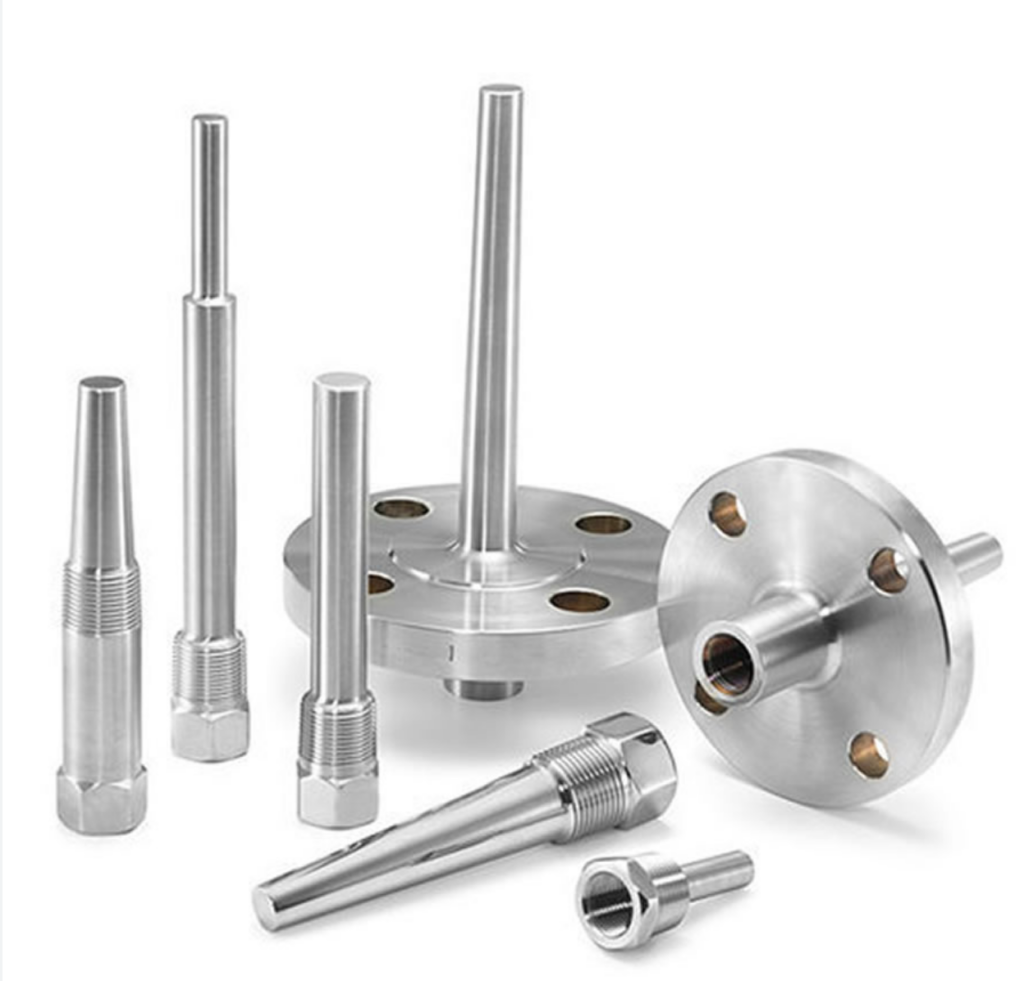
Quick Selection Matrix
| Environment | Key Threat | Recommended Sheath | Max Temp (Approx) |
|---|---|---|---|
| Chemical Processing / Sea Water | Chlorides, Pitting | 316 Stainless Steel or Hastelloy C-276 | 850°C / 1000°C |
| Furnaces / Petrochemical | High Oxidation, Nitriding | Inconel 600 | 1150°C |
| Flue Gas / Sulfur Processing | Sulfur Attack | Incoloy 800 | 1100°C |
| Severe Acids (Hot HCl/H₂SO₄) | Rapid Chemical Dissolution | Tantalum or PTFE (if cold) | 1500°C / 250°C |
| Incinerators / Smelters | Extreme Heat & Slag | Alumina Ceramic | 1700°C |