Skip to content
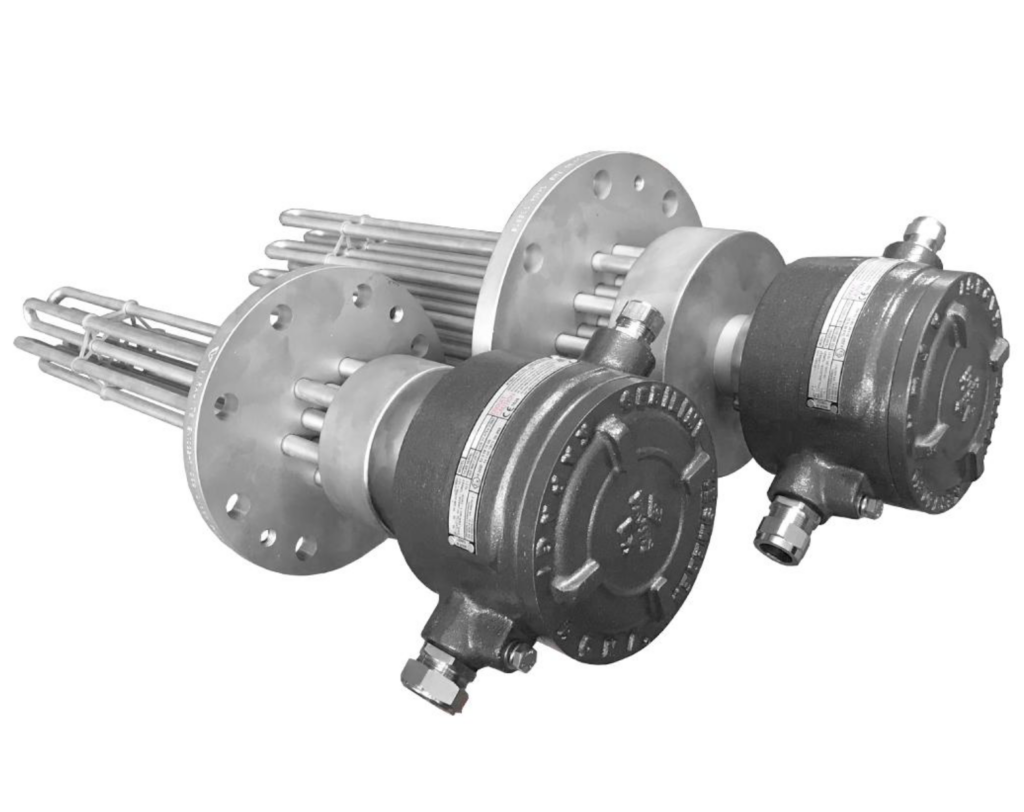
Explosion-Proof Heaters – Industrial heating in volatile environments is a high-stakes balancing act. Whether you are managing an oil refinery, a chemical processing plant, or a grain handling facility, heat is often mandatory to keep fluids flowing, protect equipment from freezing, and maintain process integrity.
However, introducing a standard electrical heat source into an environment filled with combustible gases, dust, or fibers is a recipe for catastrophe. A single arc, spark, or overheated surface can cause an industrial disaster.
That is where Explosion-Proof Heater come in. But what exactly does “explosion-proof” mean, and how do you choose the right one for your facility? Let’s break down the technical realities.
What Does “Explosion-Proof” Actually Mean?
A common misconception is that an explosion-proof heaters are designed to survive an external blast. In reality, it is the exact opposite.
- The True Definition: According to the National Fire Protection Association (NFPA) and the National Electrical Code (NEC), an “explosion-proof” designation means the equipment’s enclosure is engineered to contain any internal spark or explosion within its own housing, preventing it from escaping and igniting the volatile atmosphere outside.
How It Achieves This:
- Heavy-Duty Flame-Proof Enclosures: Built with rugged materials like cast aluminum or heavy galvanized/stainless steel to withstand internal blast pressures.
Controlled Thermal Paths: Low watt-density heating elements engineered to keep the external surface temperature strictly below the ignition point of the surrounding environment.
- Hermetic Sealing: Isolating all arc- and spark-producing control components (like thermostats and switches) from the breathable atmosphere.
Decoding the Hazardous Location Ratings
When procuring an explosion-proof heaters, you cannot simply buy a generic “HazLoc” unit. You must match the heater to the exact Class, Division, and Temperature Code of your specific zone.
| Classification Layer | What It Identifies | Examples of Environments |
|---|---|---|
| Class I | Flammable Gases or Vapors | Petroleum refineries, paint spray booths, aircraft hangars, gas plants |
| Class II | Combustible Dusts | Grain elevators, coal preparation plants, flour mills, munitions storage |
| Class III | Ignitable Fibers or Flyings | Textile mills, wood processing facilities, flax processing plants |
| Division 1 | Ignitable substances are constantly or regularly presentduring normal operations. | Inside a chemical mixing tank, near open fuel vents. |
| Division 2 | Ignitable substances are only present during abnormal conditions (leaks, equipment failures). | Storage rooms for sealed chemical drums, adjacent corridors. |
The Overlooked Metric: T-Codes (Temperature Ratings)
Even if an enclosure safely contains an internal spark, a heater can still trigger a fire if its outer surface gets too hot. Heaters are assigned a T-Code (T1 through T6) indicating their maximum surface temperature.
- T1: less than or equal to 450°C
- T3: less than or equal to 200°C
- T6: less than or equal to 85°C
The Gold Rule: The heater’s T-Code temperature must be lower than the minimum ignition temperature of the specific gas or dust present in your facility. If you choose a T-Code that is too high, the system itself becomes the ignition source.
Core Types of Explosion-Proof Heaters
Industrial operations require different heating methods depending on what is being heated. Choosing the right configuration maximizes both thermal efficiency and safety.
1. Unit & Space Heaters (For Air Comfort and Freeze Protection)
These are heavy-duty, fan-forced or convection air heaters designed to keep workspaces safe for personnel or prevent pipes and equipment in open rooms from freezing. They feature spark-proof fan blades and totally enclosed, fan-cooled (TEFC) motors.
2. Immersion & Flange Heaters (For Direct Liquid Heating)
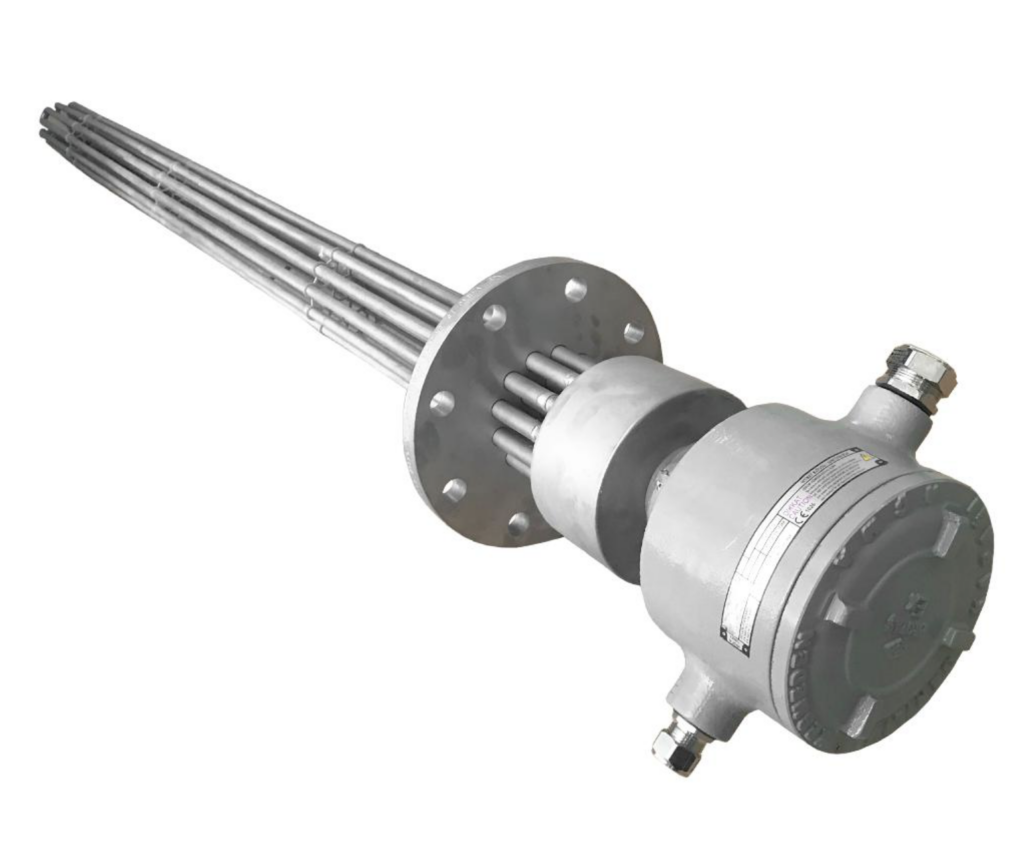
Used to heat liquids like crude oil, chemicals, heavy lubricants, or process water. The heating element is submerged directly into the fluid, utilizing heavy-duty conduits to ensure the electrical connections are perfectly isolated from surrounding fumes.
3. Drum, Tote, and Cylinder Warmers (For Viscosity Control)
When materials like resins, chemicals, or gases are stored in 55-gallon drums or IBC totes, cold weather can cause them to thicken or freeze. Explosion-proof heating jackets or induction base heaters apply uniform, controlled heat directly to the vessel walls within classified zones.
Step-by-Step Selection Protocol
Before you issue a purchase order or speak with an engineer, ensure you have documented these specific operational parameters:
1. Define Your Hazardous Zone Class
Step 1: Environmental Assessment
Identify if your hazard is a Gas/Vapor (Class I), Dust (Class II), or Fiber (Class III), and determine if it requires a Division 1 (constant threat) or Division 2 (accidental threat) certification.
2. Identify the Auto-Ignition Temperature
Step 2: Thermal Safety Limit
Look up the exact chemical properties of the substances in the air. Note their auto-ignition threshold to dictate the maximum allowable T-Code for your heater.
3. Determine the Target Medium and Volume
Step 3: Sizing and Material Compatibility
Calculate the volume of air or liquid you need to heat, the required temperature rise, and the corrosive nature of the environment. This determines your heater wattage and sheath material (e.g., Stainless Steel vs. Nickel Alloy).
4. Verify Compliance Certifications
Step 4: Legal & Safety Check
Ensure the heater model carries third-party validation marks certifying it for your specific region, such as UL 1203, NFPA 70 (NEC), CSA, or ATEX/IECEx for international operations.
Protecting Your Investment: Maintenance Matters
Explosion-proof heaters have a significantly longer lifespan than standard industrial heaters because they are built with heavy-duty, corrosion-resistant materials. However, their safety features are only as good as their maintenance schedule.
- Check the Seals: Inspect conduit entries and enclosure gaskets regularly. If a seal degrades, volatile gases can seep into the electrical housing.
- Monitor Insulation Resistance: Maintain a regular testing schedule ensuring your heater elements meet the recommended resistance rule (typically greater than 200 MΩ) to catch internal degradation before a short occurs.
- Keep it Clean: In Class II environments, dust accumulation on the heater fins acts as an insulation blanket. This forces the heater to run hotter internally, reducing efficiency and potentially exceeding its designated T-code threshold.
Need an Exact Thermal Configuration?
Every volatile environment presents unique challenges. Don’t leave your facility’s safety to guesswork. Get in touch with our application engineers today for a certified, custom-engineered heating solution tailored exactly to your space and classification requirements.